
PVC Flooring vs Vinyl Flooring: Which One Actually Suits Your Home?
Summary
This blog explains the differences between PVC flooring and vinyl flooring to help homeowners choose the most suitable option for their space. Although both flooring types have a similar appearance, they vary in terms of durability, cost, water resistance, lifespan, and overall performance. The article provides a practical comparison so readers can make an informed decision based on their lifestyle, budget, and room requirements.
The blog highlights that PVC flooring is a stronger and more durable option, making it ideal for high-traffic areas such as living rooms, hallways, kitchens, and homes with children or pets. In contrast, vinyl flooring is a budget-friendly choice that performs well in bedrooms, guest rooms, and other low-traffic spaces. It also explains that while both materials are resistant to moisture and easy to maintain, PVC flooring generally offers better long-term performance and a longer lifespan.
In addition, the article compares both flooring options based on important factors such as appearance, installation, maintenance, and overall value for money. It notes that both PVC and vinyl flooring are available in realistic wood and stone finishes, making them attractive choices for modern interiors. The blog also discusses how climate conditions in cities like Coimbatore can influence flooring performance, with PVC offering better resistance to humidity and prolonged sunlight exposure.
The blog concludes by recommending vinyl flooring for homeowners looking for an affordable solution for low-traffic areas, while PVC flooring is suggested for those seeking greater durability and long-term value in frequently used spaces. It encourages readers to visit the RS Puram Experience Center to compare both flooring materials in person and choose the option that best suits their home, budget, and lifestyle.
Share via:
PVC Flooring vs Vinyl Flooring: Which One Actually Suits Your Home?
Picking a floor sounds easy. Then you actually try to do it, and suddenly there are twenty options and everyone has an opinion. One question keeps showing up in almost every chat we have with homeowners in Coimbatore: PVC flooring vs vinyl flooring, which one should I go with?
Both look great in photos. Both come with promises of “lasts forever” and “easy to maintain.” Every dealer will tell you theirs is the best one, obviously. But these two are not the same thing, not even close, and the gap shows up after you have lived on the floor for a year or two, not on day one.
We hear this question almost every week at our RS Puram Experience Center. Someone walks in with a Pinterest folder full of saved images, a rough budget number in their head, and honestly no clear idea which of these two materials fits their home. So let us actually sort this out, room by room, rupee by rupee. By the time you finish reading, you will know exactly where you stand on PVC flooring vs vinyl flooring.
What Are We Even Talking About Here?
PVC is a Poly Vinyl Chloride. Simple idea, long name. A stiffer, more dense flooring typically installed in planks or tiles, with a thicker protection layer. Think of it as the ironed older brother of vinyl as it’s designed to handle more foot traffic and everyday wear and tear.
The broader, more common is vinyl. It is softer and more flexible, is available in sheets, tiles or planks, and it is made up of layers of PVC with a printed design and a protective coat. There are a number of years it has been around and it is one of the most using and most inexpensive flooring choices among Indian houses.
So when people search for PVC flooring vs vinyl flooring on google, they really want to know this: Will a normal vinyl floor suffice or do I really need the more durable and expensive PVC?
Honestly, it depends.
On the room. On who is walking through it every day. On what you are willing to spend. We are not going to dodge the question with a vague “it depends on your lifestyle” line either. Let us get into the actual details.
Durability: This Is Where PVC Wins
This part usually settles the PVC flooring vs vinyl flooring debate for most people, and fair enough.
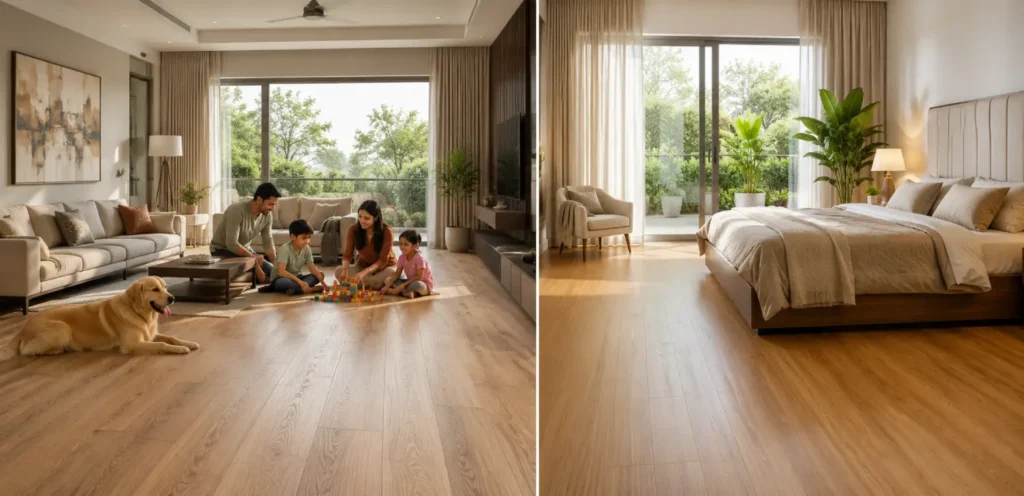
Regular vinyl flooring works well in rooms that do not see much action. Bedrooms, guest rooms, a quiet little home office, all fine. But drag a heavy dining chair across it every single day, or let a toddler ride a tricycle on it for a year, and you will start noticing dents and scratches that just do not bounce back.
PVC flooring is built tougher from the start. You usually get:
- A thicker wear layer, around 0.3mm to 0.5mm more than standard vinyl
- Better resistance to dents from furniture legs and dropped objects
- A higher tolerance for heavy daily footfall in living rooms, hallways, and entryways
Got kids, pets, or a house where furniture gets moved around constantly? PVC flooring is the safer choice. A quiet bedroom that barely sees footfall? Regular vinyl flooring works fine and saves you some money.
We have watched this go wrong before, by the way. A client once put standard vinyl across her entire living room because it looked stunning under the showroom lights. Eight months and one very enthusiastic Labrador later, the floor told a completely different story. That is the kind of thing no brochure ever mentions.
Water Resistance: Decent, Not Magic
A lot of people assume both these materials are completely waterproof. They are not. They’re waterproof, which is another thing, and that’s a big deal in Indian kitchens and bathrooms where water can accumulate for longer than anyone would like.
There is no issue with vinyl flooring when it comes to splashes and small spills, as long as someone cleans them up reasonably quickly. But leave water in the edges and over time it can work its way into the seams, particularly around skirting boards and door thresholds.
PVC flooring will fare a little better when it comes to moisture, but it must be properly sealed at the edges. Neither one replaces actual waterproofing under your bathroom floor. If a dealer tells you otherwise, that is your cue to walk out.
Our honest take: PVC flooring is worth the extra cost in kitchens and utility areas. Vinyl flooring does the job just fine everywhere dry.
Cost: The Number Everyone Actually Cares About
Let is just talk money, because this is usually where the PVC flooring vs vinyl flooring debate gets decided in real homes, not in theory.
Vinyl flooring is the cheaper option of the two. It is been the default pick for budget renovations for years, and the price tag reflects that. You get a floor that looks good and works well without blowing up your renovation budget.
PVC flooring costs more, somewhere between 20% and 40% above standard vinyl depending on the brand and thickness. That extra money goes into the thicker top layer, the denser core, and a floor that simply lasts longer before it needs replacing.
This is how we usually put it to people who walk into our studio. Flooring a rental, or a room you will probably redo in five years anyway? Vinyl makes total sense. Flooring your forever home, the one you do not want to touch again for a decade? PVC earns back that extra cost over time.
There is also resale value, which people forget about until it is too late. A buyer walking through your home has no idea what brand of flooring you used. But they will definitely notice a scratched, tired looking floor two years in. That is not a small thing if you ever plan to sell.
Look and Feel: Closer Than You'd Expect
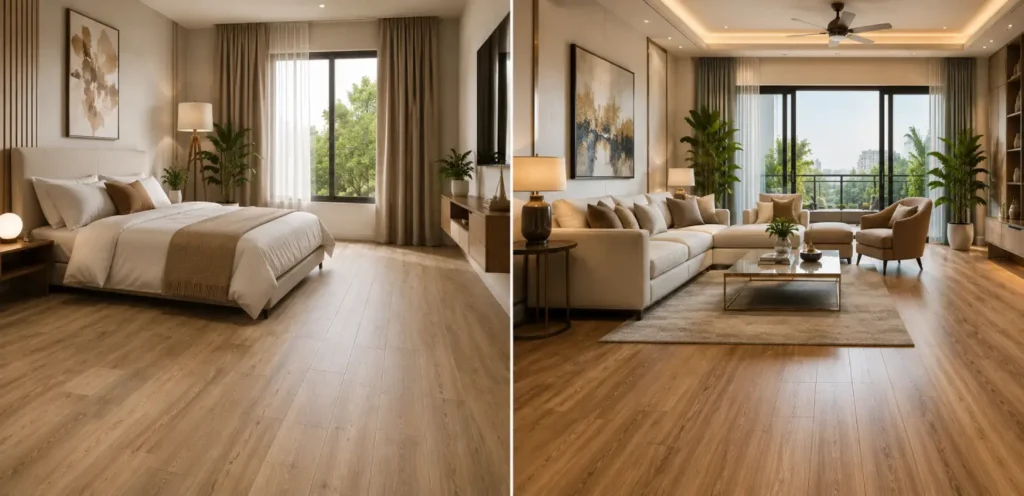
Both materials have come a long way from the plain vinyl sheets your grandparents probably remember from old government offices. Modern vinyl flooring and PVC flooring both come in:
- Wood grain finishes that genuinely pass for real timber from a few feet away
- Stone and marble patterns that give a premium look without the premium price
- Matte and glossy finishes depending on how your room is lit
- Plank and tile formats to fit different room sizes and budgets
The feel underfoot does differ a bit. PVC flooring feels firmer and more solid, closer to engineered wood. Vinyl flooring feels softer and slightly cushioned, which a lot of people actually prefer, especially in bedrooms where you’re padding around barefoot most of the time.
So if looks alone are your worry, you really can not go wrong with either one. This decision is about how the floor performs over time, not how it looks on installation day.

Installation and Upkeep
Both materials go down as click lock or glue down, depending on the format you choose, and neither one needs the heavy work that tile or marble demands. That’s one of the reasons both have remained popular for homeowners looking for rapid and little mess house improvement.
Installation typically is completed in a day or two for an average home, provided that the subfloor under the home is level and dry. If the subfloor is uneven or moist, either material will be affected, so prep is more important than it is generally believed to be.
Maintaining the appearance of either floor in good condition is very easy:
- Use a dust brush or dustpan and brush regularly to prevent any grit from scratching the surface
- Use a damp cloth, not a wet one, to mop up.
- Skip harsh chemical cleaners, they dull the finish over time
- Pop felt pads under furniture legs no matter which one you choose
PVC flooring tends to handle daily wear without needing constant touch ups, which is one reason it’s a popular pick for vinyl flooring projects that double up as semi-commercial spaces, think small offices, clinics, or shop counters sharing space with a home.
How Long Will It Actually Last?
People rarely ask this upfront, but honestly, it might be the most useful question in the entire PVC flooring vs vinyl flooring debate.
Standard vinyl flooring usually lasts somewhere between 8 and 12 years with reasonable care, depending on how much footfall it sees. A quiet bedroom might stretch that further. A busy hallway will land closer to the shorter end.
PVC flooring tends to go beyond that, often somewhere between 12 and 18 years under moderate to heavy use. The denser core wears down slower, and the thicker top layer takes longer to show its age.
None of these numbers are fixed in stone. Sunlight, humidity, how often you mop, even the quality of the subfloor underneath all play a part. But as a rough guide, PVC flooring buys you a longer stretch before you’re back to square one.
A Few Honest Downsides, Because We're Not Here to Oversell
No flooring is perfect, and we’d rather say that now than have you find out the hard way later.
Vinyl flooring can feel a little less premium underfoot compared to real wood or stone, even with the nicer finishes available today. It is also more prone to dents under really heavy furniture if you skip the felt pads.
PVC flooring, while tougher, costs more upfront, and it’s not always necessary for every single room. Spending extra on PVC for a spare room that gets used twice a year doesn’t really make sense.
Knowing where each one falls short helps you spend smart instead of overspending in the wrong places and underspending where it actually counts.
Does Coimbatore's Climate Even Matter Here?
Yes, more than you would think. Heat and humidity affect flooring for Indian homes in ways that do not really come up in countries with milder, drier weather.
Both PVC flooring and vinyl flooring handle our humidity reasonably well, but PVC’s denser build resists expanding and contracting a little better when the seasons shift. You should also look for a UV resistance rating before purchasing the windows for homes in the vicinity of Coimbatore, which feature large windows and direct sunlight. The cheaper vinyl flooring can fade more quickly when under constant sunlight conditions, while the higher-rated PVC flooring will last longer in terms of color retention.
Installing a sunroom or a living room facing balcony? Ask about this specifically before you sign off on anything.
So, Which One Should You Actually Pick?
This is a quick way to settle the PVC flooring vs vinyl flooring question without overthinking it for weeks.
Go with vinyl flooring if:
- You are working with a tighter budget
- The room sees low to moderate footfall
- You’re flooring a bedroom, study, or guest room
- This isn’t really a long-term home for you
Go with PVC flooring if:
- The room gets heavy daily use, think living rooms, hallways, kids’ rooms
- You want a floor that lasts without redoing it in a few years
- You’re flooring a semi-commercial space alongside your home
- You can stretch the budget a little for the long-term payoff
There is no single right answer here. It really comes down to how you actually live in your space, not just how the floor looks on installation day.
Conclusion
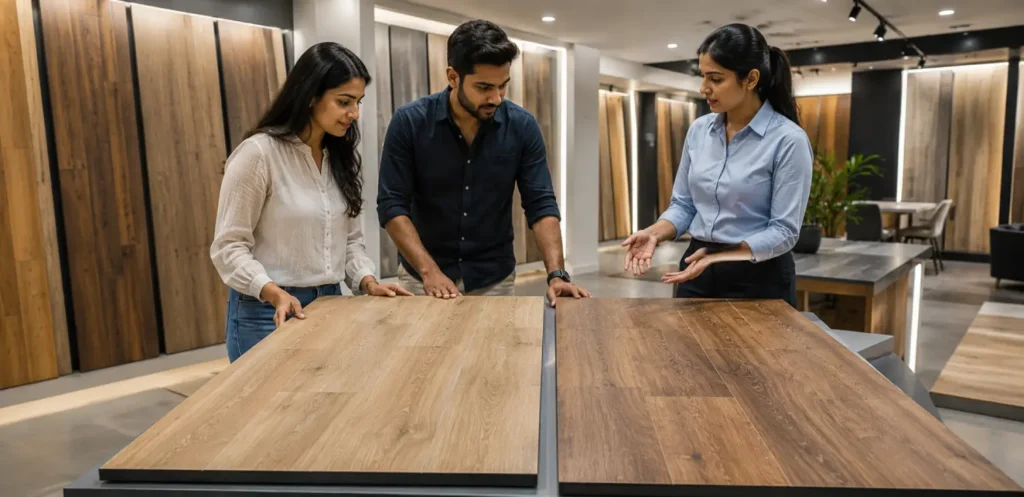
We have had this exact conversation with dozens of homeowners across Coimbatore, Chennai, and Bangalore. Most people walk in convinced about one option because of something they saw online, and end up choosing the other once they actually touch and feel the samples for themselves.
There is really no better way to make a comparison between PVC flooring vs vinyl flooring than this. Photos will not tell you how the floor feels under your feet, how it sounds when you step on it or how the finish catches the light in the room at 4 pm on an average afternoon. Two very different things really, a swatch on your phone screen and a plank under your bare feet, we’d prefer you not to jump in both before you find out!
Reading about PVC flooring vs vinyl flooring only gets you so far. The real decision happens when you walk on both and feel which one fits your home and your budget.
Drop by our RS Puram experience center. We’ll walk you through both materials side by side, show you real samples in real daylight, and help you figure out exactly what your space needs. No pressure, no upselling, just an honest conversation about a floor that’s going to be under your feet for years to come.
Frequently Asked Questions
Can PVC or vinyl flooring go over existing tiles?
Usually yes, as long as the existing surface is flat, clean, and does not have major cracks. We always check this on site before confirming for your home.
Which one feels warmer underfoot?
Vinyl flooring tends to feel warmer and softer since it has a bit more give. PVC flooring feels firmer, closer to walking on engineered wood.
What's better for flooring for Indian homes with pets?
PVC flooring, hands down. Claws and the occasional accident are far more forgiving on PVC’s denser surface than on standard vinyl.
Do both come with a warranty?
Most good brands offer warranties on both, though PVC flooring warranties usually run longer given its sturdier build. Always ask for the actual warranty terms in writing, not just a verbal promise from whoever’s selling it to you.