
Plan modular kitchens with efficient layouts, organized storage, durable finishes, and practical workspace planning for compact apartments, villas, and family homes.


Plan modular kitchens with efficient layouts, organized storage, durable finishes, and practical workspace planning for apartments, villas, and compact homes.
Modern homes require kitchens that are organized, easy to maintain, and practical for everyday cooking. Modular kitchens improve storage management through planned cabinet systems, dedicated work zones, and better utilization of available space.
Unlike traditional kitchens, modular kitchens use factory-finished cabinets and modular storage accessories that simplify maintenance and improve organization. Dedicated storage areas help organize cookware, groceries, utensils, and appliances more efficiently.
Apartment kitchens especially benefit from modular layouts because storage can be increased through loft cabinets, corner units, pantry pull-outs, and vertical storage systems.
Well-planned modular kitchens also improve movement between cooking, washing, and preparation areas. This creates a more organized cooking environment while reducing countertop clutter.
Modular kitchen layouts are commonly designed for:
- Compact apartments
- Open kitchen concepts
- Family kitchens
- Villas
- Urban homes with limited space
The right modular kitchen layout depends on available kitchen space, family size, cooking habits, appliance placement, and storage requirements.
Compact kitchens often require layouts that improve movement space while maximizing cabinet storage. Larger kitchens can accommodate additional countertop areas, tall units, pantry systems, and multiple work zones.
Ventilation, chimney placement, sink position, refrigerator clearance, and utility access should also be considered during layout planning. A poorly planned layout can reduce storage efficiency and create movement restrictions during daily cooking.
Different kitchen layouts solve different space challenges:
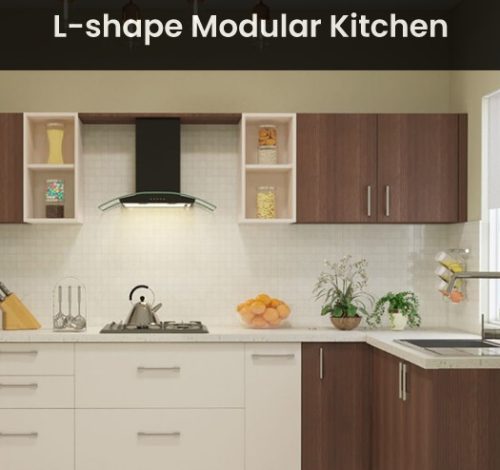
- L shape kitchens improve corner utilization
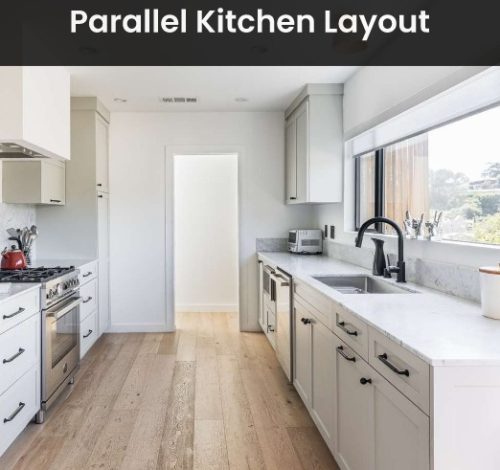
- Parallel kitchens separate work zones
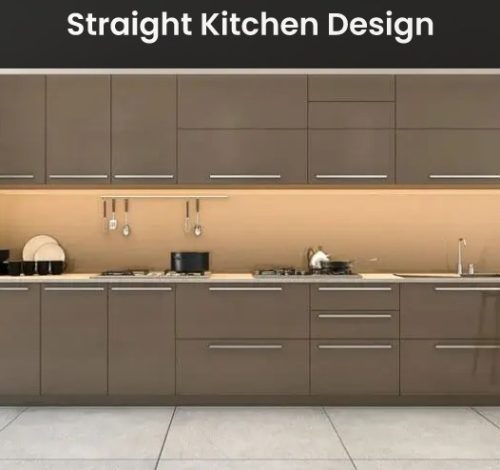
- Straight kitchens suit compact apartments
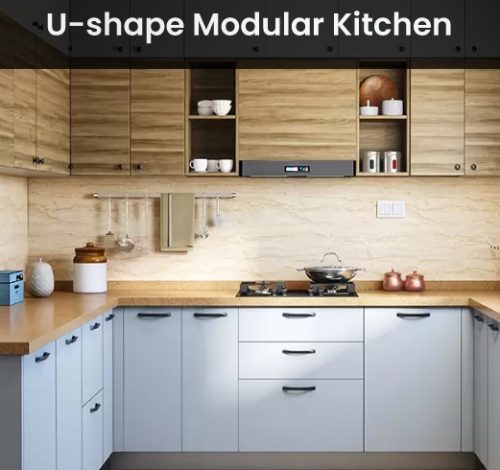
- U shape kitchens maximize storage and countertop space
The layout should improve:
- Workflow
- Accessibility
- Countertop usage
- Appliance organization
- Daily cleaning convenience
Choose from practical modular kitchen layouts designed for compact homes, open kitchens, and spacious interiors. From straight kitchens to G-shaped and parallel layouts, every design improves workflow, storage, and everyday comfort.
Types of Modular Kitchen Layouts
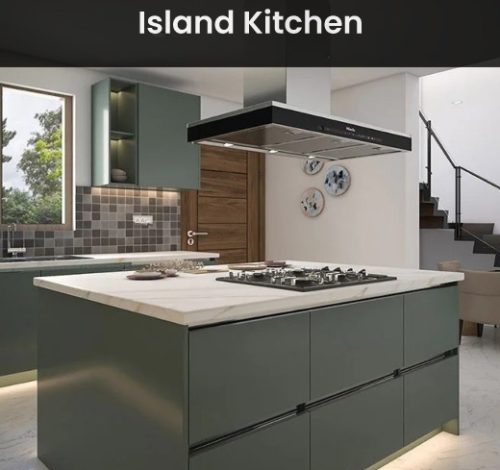
Different modular kitchen layouts suit different room sizes and cooking requirements. Straight kitchens work well for compact apartments, parallel kitchens improve efficiency in narrow spaces, while G-shaped kitchens offer additional storage and countertop space for larger homes.
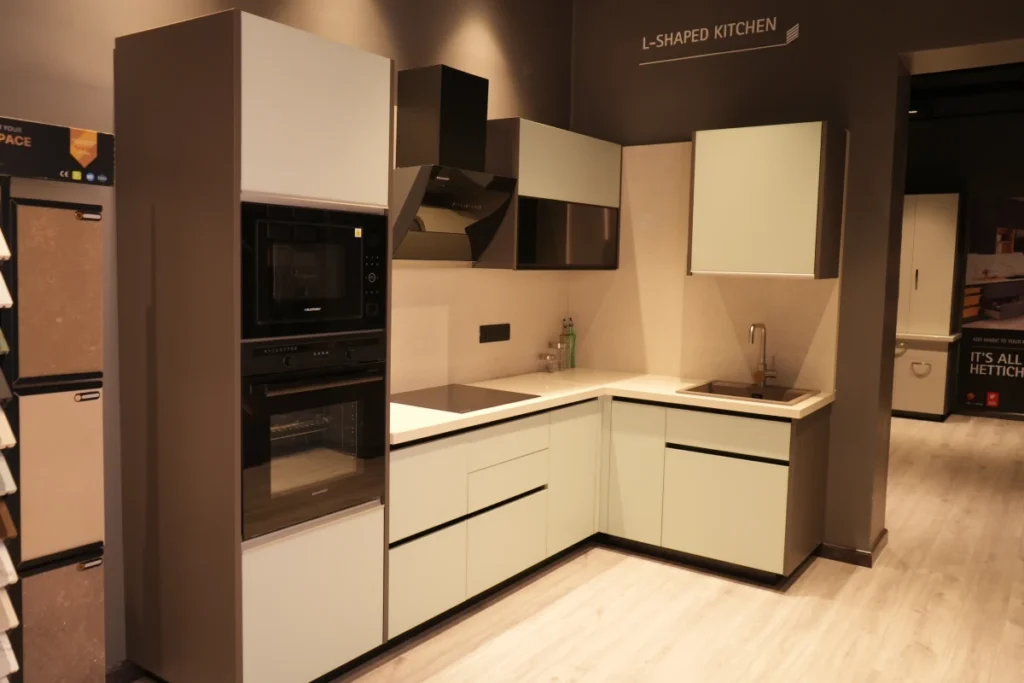
L SHAPE MODULAR KITCHEN
L shape modular kitchens are commonly preferred for apartments and medium-sized homes because they maintain open movement space while improving corner utilization.
This layout supports better countertop access and allows efficient placement of the sink, refrigerator, and cooking area without overcrowding the kitchen.
Best suited for:
- Compact apartments
- Open kitchen layouts
- Medium-sized homes
- Small family kitchens
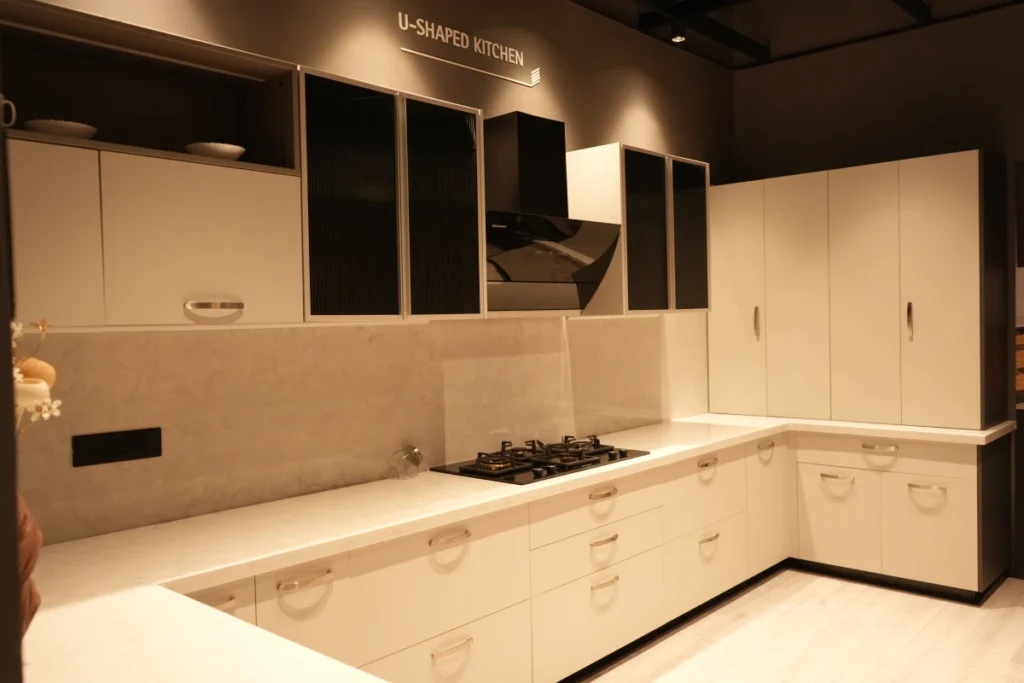
U SHAPE MODULAR KITCHEN
U shape kitchens provide higher storage capacity because cabinets and countertops are planned across three connected walls.
This layout works well for larger kitchens where separate preparation, cooking, and washing areas are required. Additional storage also helps organize cookware, pantry items, and appliances more efficiently.
Best suited for:
- Larger homes
- Family kitchens
- High storage requirements
- Frequent cooking usage
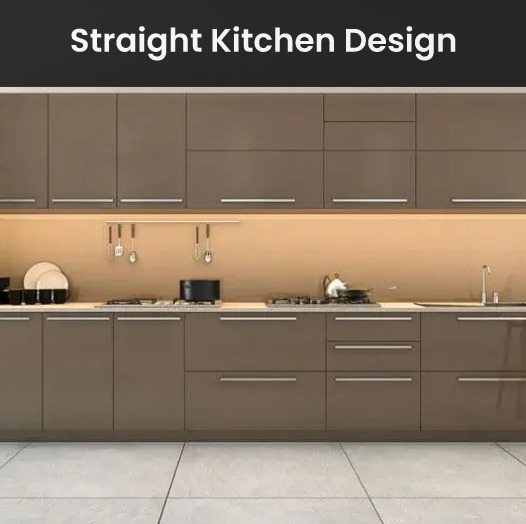
STRAIGHT MODULAR KITCHEN
Straight modular kitchens are practical for studio apartments and compact homes where kitchen width is limited.
Tall units, overhead cabinets, and organized drawer systems help increase storage without occupying additional floor space.
This layout works best when:
- Kitchen space is narrow
- Appliance placement is limited
- Compact storage is required
- Open movement space is important
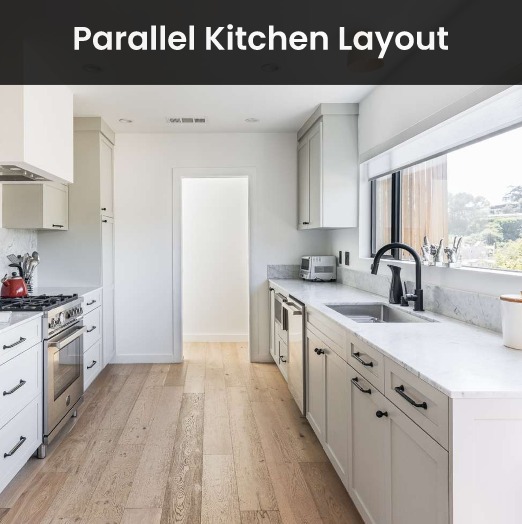
PARALLEL MODULAR KITCHEN
Parallel kitchen layouts improve workflow by separating preparation, cooking, and washing areas across two counters.
This layout creates organized work zones and improves movement during cooking. Parallel kitchens are commonly preferred for narrow but longer kitchen spaces.
Best suited for:
- Narrow kitchens
- Apartment layouts
- Organized workflow planning
- Higher cabinet storage
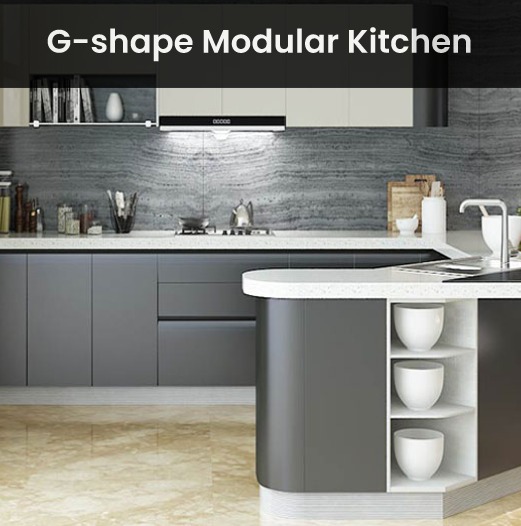
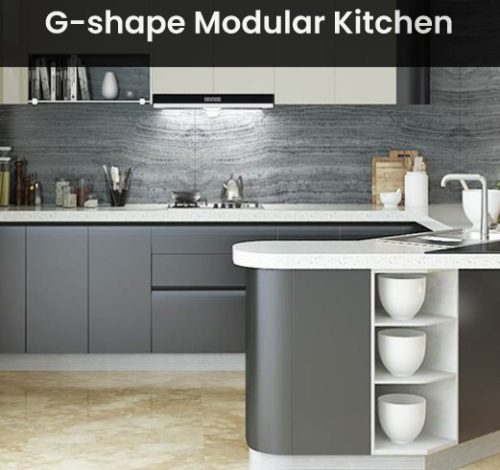
G SHAPE MODULAR KITCHEN
G shape kitchens are an extension of the U-shaped layout, offering an additional countertop or peninsula that increases storage and workspace. This layout helps create dedicated zones for food preparation, cooking, serving, and casual dining.
It works well for larger kitchens where homeowners require maximum cabinet space and improved functionality. The extended counter can also be used as a breakfast area or a convenient serving station during gatherings.
Best suited for:
- Large family homes
- Open-plan kitchen layouts
- Homes requiring extra storage
- Frequent entertainers and hosts
- Homeowners who prefer separate work zones
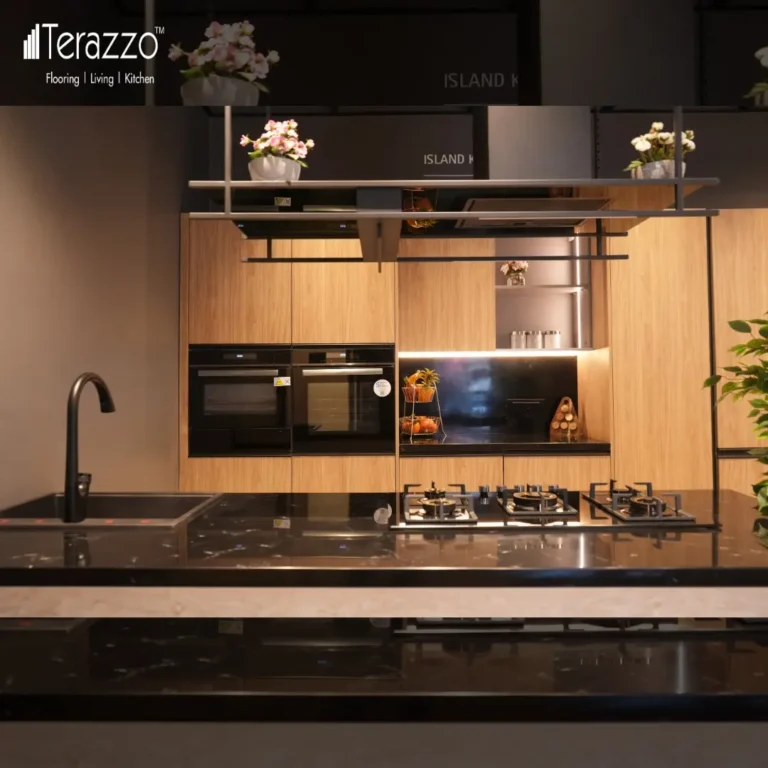
ISLAND MODULAR KITCHEN
Island modular kitchens feature a central countertop positioned independently from the main kitchen layout. The island adds valuable workspace and creates a social hub where family members can interact while cooking activities take place.
This layout is ideal for spacious kitchens and open-concept homes. Depending on the design requirements, the island can function as a preparation counter, breakfast table, additional storage area, or even accommodate built-in appliances.
Best suited for:
- Spacious homes and villas
- Open kitchen concepts
- Families who enjoy entertaining guests
- Homes requiring additional prep space
- Homeowners seeking a premium kitchen design
Modular kitchen cabinets and storage units help organize cooking essentials while improving functionality. Terazzo modular kitchens include base cabinets, wall cabinets, pantry units, and customized storage accessories for efficient kitchen interiors.
Storage planning is one of the most important parts of modular kitchen design. A kitchen may look visually organized, but poor storage planning can still create countertop clutter and reduce accessibility during cooking.
Modern modular kitchens use dedicated storage systems designed for cookware, groceries, utensils, cleaning products, and kitchen appliances.
Popular modular kitchen storage solutions include:
Tandem drawers
Used for storing cookware, plates, and heavy utensils with smooth sliding access.
Corner carousel units
Help utilize difficult corner areas that are usually wasted in traditional kitchens.
Pantry pull-out systems
Provide vertical grocery storage with easy access to packed food items and containers.
Cutlery organizers
Separate spoons, knives, and kitchen tools inside drawers for better organization.
Bottle pull-outs
Designed for storing oils, sauces, and spice bottles near cooking zones.
Under-sink storage
Helps organize cleaning products and kitchen utilities below the sink area.
Tall pantry units
Improve vertical storage capacity without increasing countertop congestion.
Loft cabinets
Useful for storing less frequently used kitchen items in apartment kitchens.
Proper storage planning improves:
- Kitchen organization
- Daily accessibility
- Countertop space
- Cleaning convenience
- Workflow efficiency
Kitchen materials affect durability, maintenance, moisture resistance, and long-term usability. Material selection usually depends on cooking frequency, cleaning requirements, finish preference, and budget.
Laminate finishes are widely used because they are durable and easier to maintain in daily cooking environments. Matte laminates help reduce visible fingerprints and oil marks, while glossy laminates create a brighter kitchen appearance.
Acrylic finishes provide a reflective surface and are commonly preferred for contemporary modular kitchens. Textured finishes help reduce visible scratches and provide a more natural appearance.
Countertop materials such as quartz and granite are selected for heat resistance, durability, and ease of cleaning. Quartz countertops are especially preferred for modern kitchens because they require less maintenance and maintain consistent appearance over time.
Hardware systems also affect long-term usability. Soft-close hinges, drawer channels, tandem systems, and pull-out accessories improve smooth operation and reduce wear during daily usage.
Kitchen material selection should consider:
- Moisture resistance
- Heat resistance
- Cleaning convenience
- Scratch visibility
- Long-term maintenance
Better space utilization
Modular kitchens improve storage through vertical cabinets, corner systems, loft storage, and organized drawer planning.
Improved kitchen workflow
Dedicated cooking, preparation, and washing zones help reduce unnecessary movement during cooking.
Organized storage
Cabinets, pantry units, and pull-out systems improve organization for cookware, groceries, utensils, and appliances.
Easy maintenance
Factory-finished surfaces are easier to clean and maintain compared to traditional kitchen structures.
Efficient appliance integration
Refrigerators, microwaves, chimneys, ovens, and dishwashers can be planned more efficiently within the layout.
Modern kitchen appearance
Aligned cabinets and coordinated finishes create a cleaner and more organized kitchen environment.
Apartment kitchens often face storage limitations, restricted movement space, and appliance placement challenges. Modular kitchens help solve these problems through efficient layout planning and organized cabinet systems.
Compact homes require careful planning of countertop space, overhead cabinets, refrigerator clearance, chimney positioning, and utility access. Proper modular kitchen layouts improve storage capacity without making the kitchen feel overcrowded.
Vertical storage systems such as tall units, loft cabinets, pantry pull-outs, and overhead shelves help maximize storage in smaller kitchens.
Straight kitchens and L shape kitchens are commonly preferred for apartment layouts because they maintain open movement space while improving accessibility.
Important considerations for apartment kitchens include:
- Chimney duct planning
- Washing machine integration
- Refrigerator placement
- Utility area access
- Countertop usability
- Ventilation
Modern modular kitchens improve storage, functionality, and everyday convenience in Indian homes. From compact apartments to spacious villas, modular kitchens help organize cooking spaces with efficient layouts, smart cabinet systems, and easy-to-maintain finishes
Different modular kitchen layouts suit different requirements. Straight kitchens work well for studio apartments and smaller homes, while L-shaped and parallel kitchens improve movement and workflow. U-shaped and G-shaped kitchens provide additional storage and countertop space for larger families and open interiors.
Designed for modern homes, modular kitchens combine functionality, storage efficiency, and clean aesthetics.
- Space-saving modular kitchen layouts
- Custom cabinet and storage solutions
- Matte, laminate, and acrylic finish options
- Modular kitchens for apartments and villas
- Smart kitchen accessories and organizers
Terazzo modular kitchens are designed with practical storage solutions, durable materials, and customized layouts that match modern interior styles. From finish selection to appliance planning, every kitchen is tailored for functionality, comfort, and long-term usability.
Modern modular kitchens improve storage, functionality, and everyday convenience in Indian homes. From compact apartments to spacious villas, modular kitchens help organize cooking spaces with efficient layouts, smart cabinet systems, and easy-to-maintain finishes
- Kitchen measurement and requirement discussion
- Layout planning based on available space and movement requirements
- 3D kitchen design and storage planning
- Material, finish, countertop, and hardware selection
- Manufacturing and modular unit preparation
- Installation, alignment, and final inspection
The planning process helps homeowners visualize storage arrangements, appliance placement, countertop accessibility, and kitchen workflow before installation begins.
Terazzo designs modular kitchens focused on practical storage, efficient layouts, and long-term usability. Every kitchen is planned based on available space, family usage patterns, cooking habits, and storage requirements.
Reasons homeowners choose Terazzo:
- Layout planning based on kitchen dimensions
- Space-saving cabinet systems
- Organized storage planning
- Durable finishes and hardware
- Efficient appliance integration
- Practical workflow design
- Support for apartment and villa kitchens
- Professional installation process
The focus is always on creating kitchens that remain organized, functional, and easier to maintain over time.
Frequently Asked Questions(FAQ):
A modular kitchen is a modern kitchen setup made with factory-built cabinets, storage units, drawers, and accessories that are assembled based on your space and requirements.
Straight kitchens and L-shaped modular kitchens work well for compact homes and apartments because they save space and improve movement.
U-shaped and G-shaped modular kitchens offer more countertop space and additional storage options for large families.
Plywood, MDF, HDF, laminates, acrylic finishes, stainless steel accessories, and quartz or granite countertops are commonly used.
Matte laminate and acrylic finishes are popular because they are easy to clean and suitable for daily kitchen use.
Yes. Terazzo modular kitchens can be customized based on kitchen size, storage needs, finish styles, and appliance placement.
Terazzo offers pull-out drawers, tall units, corner storage, pantry units, wall cabinets, and organized kitchen accessories for better functionality.
Yes. Modular kitchens are widely used in apartments because they help maximize storage and improve space efficiency.
Choose the layout based on available space, number of users, cooking workflow, storage requirements, and ventilation.
Regular cleaning, proper ventilation, and avoiding excess moisture help maintain modular kitchens for long-term use.
Quartz, granite, and solid surface countertops are commonly preferred for durability and easy maintenance.
Yes. Chimneys, hobs, microwaves, ovens, dishwashers, and refrigerators can be integrated into modular kitchen layouts.