
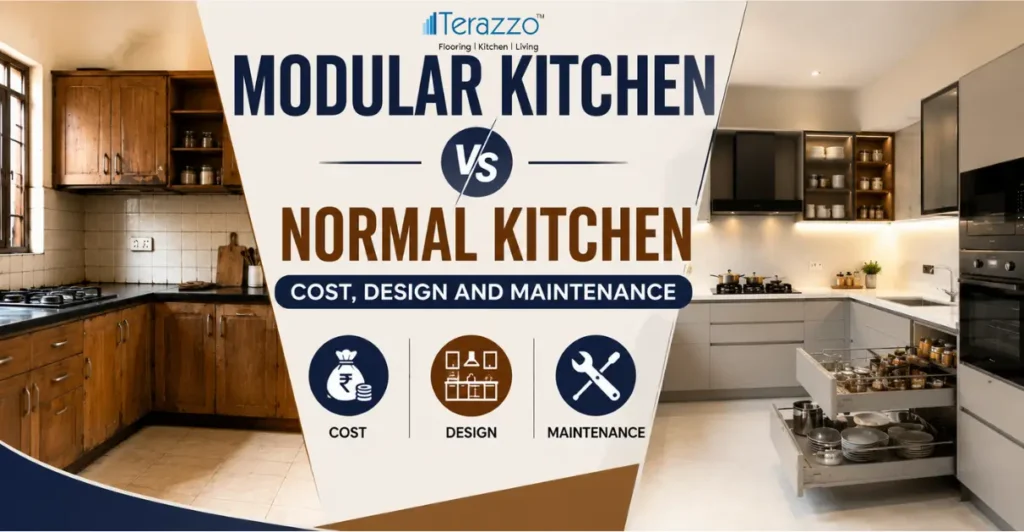
Modular Kitchen Vs Normal Kitchen: Cost, Design and Maintenance
Summary
A modular kitchen and a normal carpenter-built kitchen both serve the same purpose, but they differ in how they are designed, built, and maintained. A normal kitchen is custom-built on-site by a carpenter, making it a suitable option for homeowners with a limited budget or those who prefer traditional craftsmanship. A modular kitchen, on the other hand, is factory-manufactured, digitally planned, and assembled on-site, offering better precision, consistent quality, and a faster installation process.
When comparing cost, modular kitchens generally require a higher initial investment but provide greater transparency, modern storage solutions, and fewer unexpected expenses over time. Features such as soft-close drawers, pull-out organizers, premium finishes, and optimized layouts make modular kitchens more functional for everyday use. While carpenter-built kitchens may appear more affordable at first, additional repair costs, design changes, and maintenance can increase the overall expense in the long run.
Maintenance and durability are often the deciding factors. Modular kitchens use moisture-resistant materials and branded hardware with warranties, helping them last 10–15 years with minimal upkeep. Traditional kitchens can also last well when built by a skilled carpenter, but they are generally more prone to issues like swelling plywood, peeling laminates, and loose fittings over time. Ultimately, the best choice depends on your budget, lifestyle, and long-term plans, but a modular kitchen offers greater convenience, predictable quality, and lasting value for most modern homes.
Share via:
Modular Kitchen Vs Normal Kitchen: Cost, Design and Maintenance
So you are renovating, and someone just asked you the question that is been going around every WhatsApp family group for the last decade: modular kitchen or normal kitchen?
Your designer wants modular. Your uncle who built three houses swears by the old carpenter method. And you are stuck somewhere in between, trying to figure out who’s actually right.
This is the honest answer. Both work. Both have people who love them. But they are built in completely different ways, they cost different amounts, and they hold up differently over time. We have built both kinds of kitchens for families across Coimbatore, Chennai, and Bangalore, so we have seen where each one really shines, and where it quietly falls apart three years later.
Let us talk through it properly.
First, What's the Actual Difference?
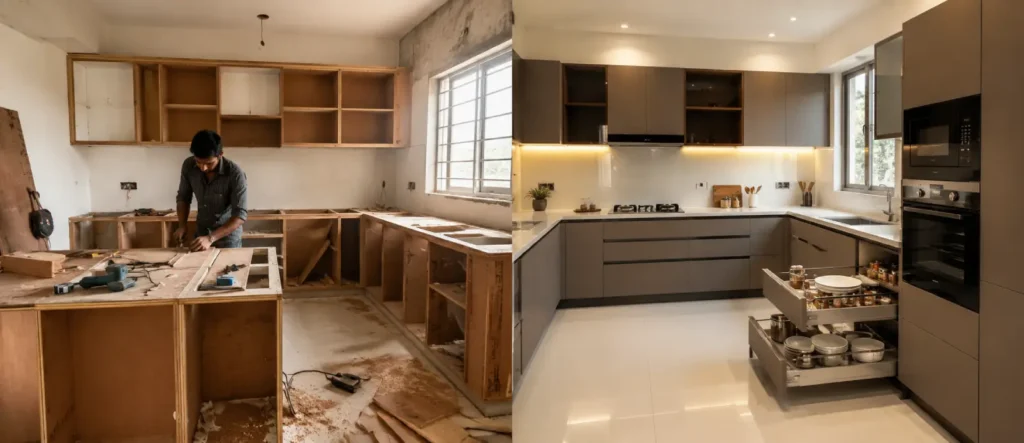
A normal kitchen gets built inside your house. A carpenter shows up, takes measurements, and builds your cabinets and shelves right there using plywood, wood, or brick. It is slow. It is custom. And honestly, it depends a lot on how good that one carpenter happens to be.
A modular kitchen works differently. The cabinets and drawers get made in a factory first, using standard sizes and materials. Then they arrive at your home and get put together like a giant puzzle designed specifically for your kitchen.
That one difference, factory made versus hand built on site, is why everything else about these two kitchens ends up so different.
Let's Talk Cost, Because That's What Everyone Really Wants to Know
Normal Kitchen: Cheaper Upfront, Sometimes Not Cheaper Overall
A carpenter kitchen usually looks cheaper on the initial quote. You’re paying for plywood, laminate, hardware, and labor, and depending on your city, that lands somewhere around ₹800 to ₹1,500 per square foot for something basic.
But this is what nobody tells you upfront. These costs tend to creep:
- Design changes halfway through cost extra
- Finishing touches you never discussed suddenly show up on the bill
- If something doesn’t fit right, that’s another visit, another charge
- No warranty means any repair later is fully out of your pocket
Modular Kitchen: Higher Starting Price, Fewer Surprises
Modular kitchens usually cost more, starting around ₹1,200 to ₹3,000+ per square foot, depending on the finish you choose. Basic laminate finishes are on the cheaper end of that range.
What you get in return is a clear breakdown. Cabinet cost, hardware cost, countertop cost, appliances, all listed out before work even starts. No guessing three weeks in.
Basically: normal kitchens can feel cheaper at first but often catch up (or overtake) modular pricing once repairs and redesigns pile up. Modular costs more on day one, but it tends to save you money, and stress, later.
Design: This Is Where Modular Really Pulls Ahead
Design isn’t just about how a kitchen looks. It’s about how well it actually works when you are cooking dinner at 8 pm and both hands are full.
Where Carpenter Kitchens Struggle
A lot depends on one person’s skill and imagination. Most carpenters work with a small set of designs they are used to, so you often miss out on:
- Soft close hinges and drawers as a default
- Pull out baskets, corner units, tandem boxes
- Cabinets that all match, since materials get sourced over weeks in small batches
- Any real preview of what the finished kitchen will look like
You are trusting someone’s hands and years of experience, without seeing the result until it is already built into your wall.
Where Modular Kitchens Win
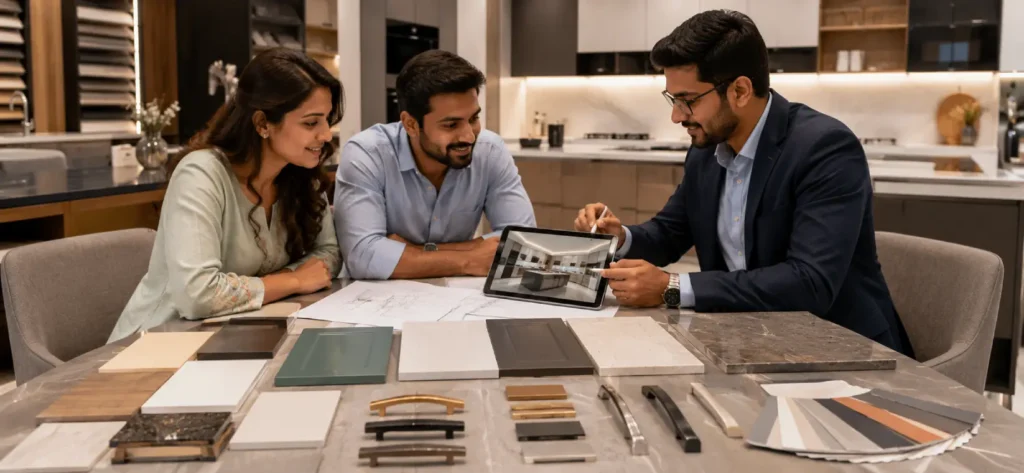
With modular, we plan your entire layout digitally before anything gets built. You see it in 3D. Want that tall unit shifted two feet to the left? We can adjust it easily, before production even starts.
You also get:
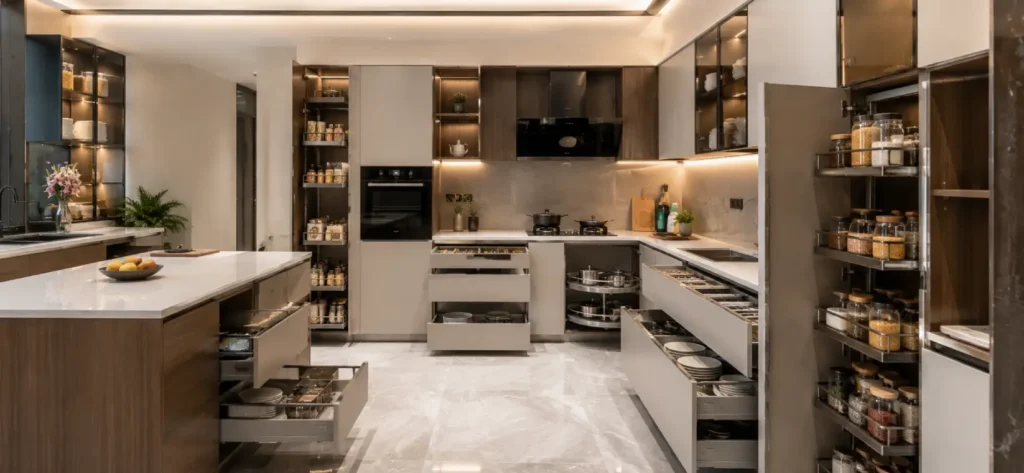
- Smart storage, carousel units, pull out pantries, cutlery organizers
- A well planned kitchen work triangle (stove, sink, and fridge), so you’re not walking in circles while cooking.
- Consistent finishes across every panel, since they all come from the same factory batch
- A much wider choice of materials, from laminate to acrylic to matte finishes
If you have ever noticed a kitchen where the cabinet doors do not line up quite right, or the color looks slightly off between units, that is usually what happens with materials bought in batches over several weeks.
Maintenance: The Thing Nobody Thinks About Until Something Breaks
Normal Kitchens Age Faster Than You'd Expect
Carpenter built kitchens use materials that do not always cope well with Tamil Nadu’s heat and humidity. Give it three to five years, and you might start noticing:
- Plywood swelling near the sink
- Laminate peeling at the edges
- Hinges going loose or squeaky
- Termites, if the wood was not treated properly to begin with
And since there is no warranty, every repair means tracking down that same carpenter (if he’s even still around) or explaining someone else’s work to a new one.
Modular Kitchens Hold Up Better
Modular kitchens use moisture resistant materials, BWP plywood, MDF with laminate, marine ply, chosen specifically for kitchen conditions. The hardware usually comes from known brands like Hettich, Blum, or Hafele, with warranties running 5 to 10 years depending on the part.
Cleaning is easier too. Laminate and acrylic wipe down without much effort. No repainting, no re polishing every couple of years.
That said, modular is not zero maintenance. Handle less designs need a bit of care around the edges, and soft close mechanisms do wear out eventually, though that is usually a quick part replacement, not a full redo.
So Which One Should You Pick?
Depends on what matters most to you.
A normal kitchen might work if:
- Your budget is genuinely tight
- You already have a carpenter nearby whose work you trust.
- You don’t mind a longer timeline or a few design compromises along the way
A modular kitchen makes more sense if:
- You want a clear cost breakdown with nothing sneaking in later
- Storage and daily usability matter to you
- You want a kitchen that still looks good in year six, not just year one
- You’re settling into this home for a while, not flipping it next year
Most people who come to us start out thinking a carpenter kitchen will save money. By the end of the conversation, they usually realize the real savings, and the peace of mind, come from getting it right the first time with a proper modular setup.
Conclusion
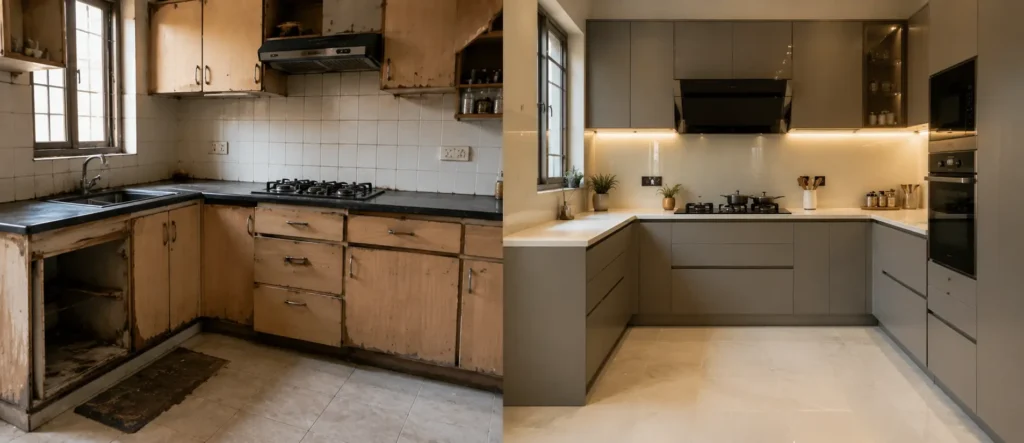
We have walked into four year old carpenter kitchens with swollen plywood under the sink, drawers that won’t slide anymore, and a finish that does not match the original color at all. We have also walked into six year old modular kitchens that still look almost new, just with a quick wipe down needed.
That is not us saying carpenter kitchens are bad. Good carpenters exist, and some traditional kitchens genuinely age well. But modular gives you something carpenter kitchens usually can’t: predictability. You know what you’re paying for, you know what you are getting, and you know roughly how it’ll hold up years down the line.
Still stuck between modular and normal? Come by Terazzo’s experience center in RS Puram, Coimbatore, and we’ll walk you through your space, your budget, and how you actually use your kitchen day to day. We’ll show you real material samples, real finishes, and give you a straight cost breakdown before you decide anything.
Your kitchen is where a good chunk of your day happens. Let’s build one that actually keeps up with you.
Frequently Asked Questions
Which kitchen is best, modular or normal?
Modular wins if you want consistent quality, better storage, and less hassle down the line. Normal kitchens can work on a tight budget, but you’re trusting one carpenter’s skill for everything.
How much do designers charge for a kitchen design?
Design charges usually range from ₹50 to ₹200 per square foot, though some designers bundle it into the overall project cost. It’s best to ask upfront whether design is charged separately or included.
What are the disadvantages of modular kitchens?
They cost more upfront than a basic carpenter kitchen, and repairs need specific replacement parts rather than a quick carpenter fix. Handle less designs also need a bit more careful cleaning around the edges.
What is the lifespan of a modular kitchen?
A well made modular kitchen typically lasts 10 to 15 years with normal use. Good hardware and moisture-resistant materials are what really stretch that lifespan out.
How long do modular kitchens last?
Most modular kitchens hold up well for 10 to 15 years before needing a real upgrade. Daily wear on hinges and handles shows up first, long before the cabinets themselves give way.