
Summary
Ask homeowners what they would change after living in a house for a year, and there is a good chance the kitchen will become part of the conversation.
Sometimes it is a lack of storage. Sometimes the countertop feels too small. In other homes, appliances slowly take over every available corner because nobody planned where they would go. Interestingly, these problems rarely show up when the kitchen is new. They appear after months of everyday use.
At Terazzo, we often notice that the kitchens people enjoy the most are not necessarily the largest ones. They are the kitchens where movement feels comfortable, storage stays organized, and daily cooking requires less effort.
This guide shares modular kitchen design ideas based on real homeowner requirements, practical planning lessons, and kitchen layouts that continue working well long after installation.
Share via:
Why Modular Kitchens Have Become the Preferred Choice
A few years ago, most kitchen discussions started with colours. People wanted glossy finishes, designer handles, and stylish cabinet shutters. Those things still matter. However, the first questions we hear today are usually very different.
One family recently visited our showroom with several kitchen references saved on their phone. We expected the conversation to revolve around design styles. Instead, they immediately started asking where they could store groceries, how much countertop space they would need, and whether the layout would feel comfortable during busy mornings.
That shift says a lot. People are no longer choosing kitchens only for appearance. They want kitchens that fit into everyday routines.
After all, nobody spends fifteen minutes admiring cabinet colours while preparing breakfast. People care about whether the storage is accessible, whether movement feels natural, and whether the space remains organized after months of daily use.
That is exactly why modular kitchens have become so popular across Indian homes.
Before Choosing a Layout, Think About Your Routine
Many homeowners start by comparing L shape kitchens, U shape kitchens, and island kitchens.
However, we usually ask a different question first.
How does your family actually use the kitchen?
A family that cooks three meals every day has very different requirements from a household that cooks occasionally. Similarly, a family that shops for groceries once a month will need more storage than someone who shops every few days.
Because of this, the best kitchen layout is rarely the one that looks impressive online. It is usually the one that supports everyday habits without creating unnecessary effort.
We have seen compact kitchens perform exceptionally well because the layout matched the family’s routine. We have also seen larger kitchens feel inconvenient because the design focused more on appearance than usability. The layout should fit your lifestyle, not the other way around.
L Shape Kitchen Design Ideas
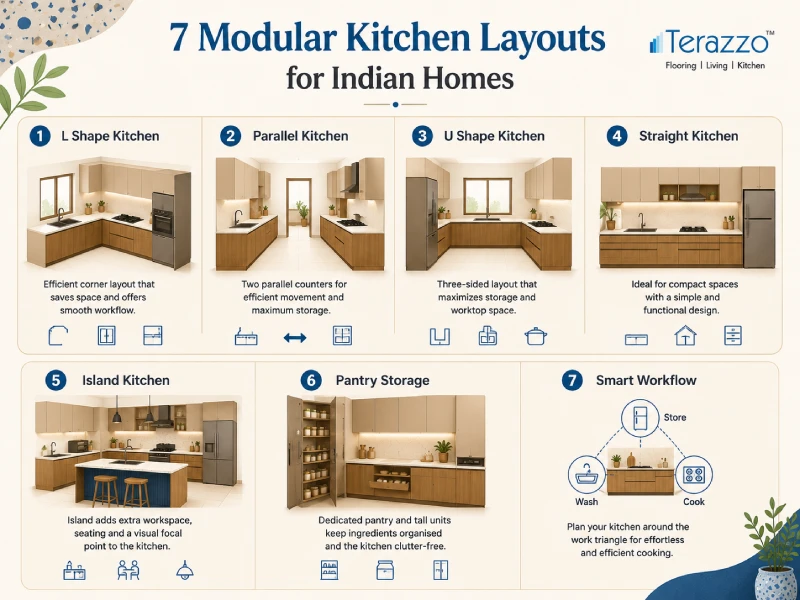
If we had to choose one layout that works well for most Indian homes, the L shape kitchen would be near the top of the list.
One reason is flexibility. The design uses two connected walls, which creates a comfortable working zone without making the kitchen feel closed.
We recently worked with a homeowner who believed their apartment kitchen was too small for a modular setup. After planning an L shape layout with tall storage units, they ended up gaining more usable storage than they expected while still maintaining enough movement space.
That project highlighted something we often see. Good planning usually creates more value than additional square footage.
L shape kitchens also work well because they leave room for dining areas and open layouts. As a result, they remain one of the most practical options for apartments and compact villas.
Best For
- 2 BHK apartments
- Compact villas
- Open kitchen layouts
Parallel Kitchen Design Ideas
Parallel kitchens rarely get the same attention as island kitchens.
Most homeowners don’t walk into a showroom asking for one. In fact, many only start considering the layout after looking at their floor plan.
That usually happens when reality enters the conversation. The available space may not be large enough for an island. An L shape layout may leave limited storage. Suddenly, a parallel kitchen starts making a lot more sense.
One thing we often hear after project completion is that the kitchen feels easier to use than expected. That reaction usually comes from the way the layout works. There is enough room to move comfortably. Storage stays close to the cooking area. Countertops remain usable even when more than one person is in the kitchen.
For many Indian families, that matters more than having a kitchen that looks impressive in photographs. Daily life places different demands on a space. Lunch boxes need to be packed before work.
Breakfast gets prepared while someone else makes tea. Groceries arrive and need a place to go. A parallel kitchen handles these situations well because it keeps activities organised without requiring a large room.
Nobody chooses a layout because it looks practical on paper. They choose it because living with it feels easier. That is probably the biggest reason parallel kitchens continue to remain relevant despite changing design trends.
Island Kitchen Design Ideas
Island kitchens attract attention for obvious reasons.
They create a strong visual statement and often become the centre of the entire kitchen. Many homeowners save island kitchen references long before they begin planning their interiors.
However, an island is not always the right answer. The decision should depend on available space rather than personal preference. We have seen homeowners sacrifice comfortable movement simply to fit an island into a room that was never designed for one.
A kitchen should feel comfortable when someone is cooking, opening cabinets, unloading groceries, and moving around at the same time. If an island improves that experience, it is worth considering.
If it becomes an obstacle, additional storage or a larger worktop usually creates more value. The most successful island kitchens are not the ones that look impressive in photos. They are the ones that make everyday cooking easier.
U Shape Kitchen Design Ideas
Some families spend significant time cooking every day. For them, additional countertop space becomes valuable.
That is where U shape kitchens perform well. This layout uses three connected sides and creates a highly functional work zone.
Terazzo includes customized U Shape Kitchen designs for larger cooking spaces.
Advantages
- Large work surfaces
- More storage
- Better organization
- Easy separation of tasks
Many serious home cooks prefer this design because everything stays within easy reach.
Best For
- Large apartments
- Independent homes
- Joint family households
Straight Kitchen Design Ideas
Not every home has a large kitchen. In compact apartments, a straight kitchen often becomes the most practical solution.
This layout places all cabinets and appliances along a single wall. Terazzo offers Straight Kitchen designs for compact homes and apartments.
Why It Works
A straight kitchen creates a clean appearance while maximizing available space. Homeowners often combine it with:
- Open shelving
- Tall storage units
- Overhead cabinets
This helps maintain functionality despite limited dimensions.
G Shape Kitchen Design Ideas
For homeowners looking maximum storage, G shape kitchens offer significant advantages. This layout extends beyond a U shape kitchen by adding an additional section. Terazzo also offers G Shape Kitchen layouts for larger spaces.
Benefits
- Additional storage
- More counter space
- Better organization
Best For
- Large villas
- Premium residences
- Families with extensive storage needs
Storage Ideas for a Better Kitchen
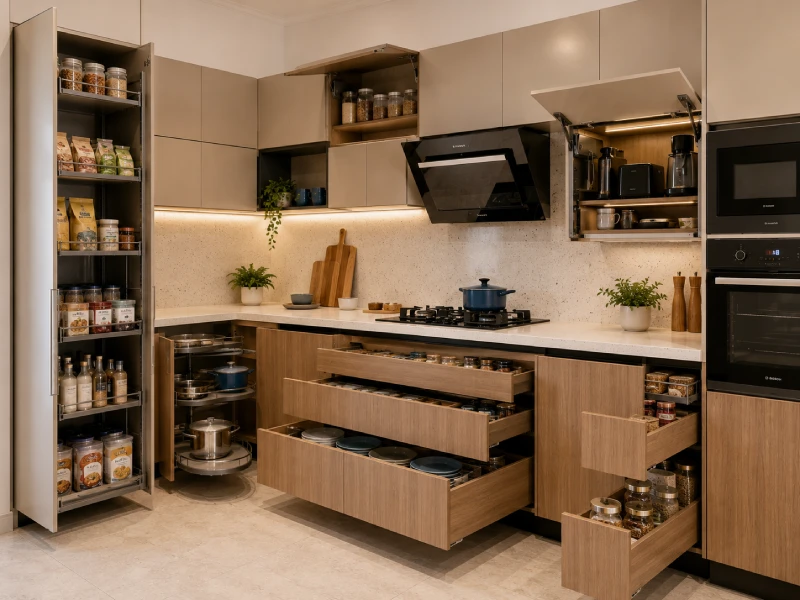
If there is one thing homeowners rarely complain about, it is having too much storage. The opposite happens far more often.
During the design stage, cabinets always seem sufficient. Then daily life starts filling them. A mixer grinder occupies one section. Grocery supplies expand into another. Festival cookware needs storage. Water bottles multiply. Lunch boxes appear from nowhere.
Within months, the kitchen starts feeling different. That is why we encourage homeowners to think beyond current requirements. Plan storage for the next five years rather than the next five months.
The storage planning ideas available from Hettich Kitchen Storage Solutions provide useful examples of Tall pantry units, deep drawers, corner pull-outs, and dedicated appliance storage may not seem exciting during the design stage. However, they often become the features homeowners appreciate the most after moving in.
If you are still in the planning stage, our guide on Interior Design Mistakes to Avoid in 2026 explains several common mistakes that affect storage, lighting, and layout decisions.
Don't Ignore Kitchen Lighting
Many homeowners focus on cabinets, countertops, and appliances during planning. Lighting often enters the conversation much later.
That is understandable because lighting is difficult to evaluate until people start using the space. A poorly lit kitchen can feel smaller than it actually is. Shadows appear on work surfaces. Certain corners become uncomfortable to use, especially during early mornings or evenings.
On the other hand, good lighting quietly improves the entire experience. Task lighting near preparation areas makes cooking easier. Under-cabinet lighting improves visibility without making the room feel harsh. Meanwhile, ambient lighting helps create a more balanced atmosphere.
Interestingly, we have seen kitchens feel completely different after a lighting upgrade, even when nothing else changed. That is why lighting should be planned alongside the layout rather than treated as a finishing touch.
Choosing the Right Kitchen Colours
Kitchen trends change quickly. However, timeless colour palettes continue performing well year after year.
Popular choices include:
| Colour Palette | Style |
|---|---|
|
White + Wood
|
Warm Modern
|
|
Beige + Walnut
|
Elegant
|
|
Elegant
|
Contemporary
|
|
Sage Green + White
|
Natural
|
|
Cream + Oak
|
Timeless
|
Many homeowners now prefer softer shades because they remain visually comfortable over the long term. If you are still deciding on colour palettes, layouts, and materials throughout the house, our guide on Home Interior Design Ideas for Indian Homes shares practical ideas that work across living rooms, bedrooms, kitchens, and other spaces.
How Workflow Improves Your Kitchen
A kitchen can look beautiful and still feel frustrating to use.
In most cases, the problem is not the storage or the finish. It is the workflow. Think about a normal weekday morning.
Someone takes milk from the refrigerator. Breakfast is being prepared. Lunch boxes are packed. Tea is on the stove. If movement between these activities feels awkward, the kitchen will eventually become tiring to use.
That is why the relationship between the refrigerator, sink, and cooking zone deserves attention during planning. A well-planned workflow often goes unnoticed because everything feels natural.
People move around comfortably. Frequently used items remain accessible. Everyday tasks require less effort. When homeowners describe a kitchen as “easy to use,” workflow is usually the reason.
Common Modular Kitchen Mistakes
Most kitchen mistakes do not become obvious immediately. They appear gradually after people start living in the space.
One common issue is underestimating storage requirements. During the planning stage, cabinets often seem sufficient. A few months later, appliances, groceries, and daily essentials start competing for space.
Another mistake is focusing too heavily on appearance. A beautiful finish cannot compensate for poor layout decisions.
Similarly, lighting is often overlooked until homeowners realise that certain work areas feel darker than expected.We also see homeowners choose layouts based entirely on reference images. While inspiration is useful, every home has different dimensions and requirements.
A kitchen should be planned around the people using it, not around a photograph found online.
Popular Modular Kitchen Trends
While trends should not dictate every decision, certain preferences continue appearing across projects.
These include:
- Handleless cabinets
- Tall pantry storage
- Built-in appliances
- Soft-close hardware
- Warm neutral colours
- Open kitchen layouts
These choices improve both convenience and visual appeal.
Conclusion
A good kitchen rarely becomes a topic of discussion. A modular kitchen should do more than look good in photographs.
People simply enjoy using it. The layout feels natural. Storage remains organized. Daily tasks happen without unnecessary effort.
That is usually the result of careful planning rather than expensive materials or design trends. At Terazzo, we often find that homeowners are happiest when decisions are based on how they live rather than what is currently popular.
A kitchen should support everyday routines, accommodate future needs, and remain comfortable long after the project is completed. Whether you are planning a compact apartment kitchen or a larger family space, the same principle applies.
Focus on how the kitchen will be used every day. The design choices tend to become much clearer after that.
What is the best modular kitchen layout for Indian homes?
L shape and parallel kitchens work well for many Indian homes because they balance storage, workflow, and space efficiency.
How do I choose the right modular kitchen design?
Start with available space, cooking habits, storage needs, and family size before selecting a layout.
Is an island kitchen suitable for every home?
No. Island kitchens require sufficient circulation space. They work best in larger kitchens.
Which modular kitchen design is best for small kitchens?
Straight kitchens and L shape kitchens are often suitable for apartments and compact homes.
Which colour is best for a modular kitchen?
Neutral shades such as white, beige, warm grey, and wood finishes remain popular because they age well.
Which modular kitchen layout offers the most storage?
U shape and G shape kitchens typically provide the highest storage capacity.
What is the biggest mistake homeowners make during kitchen planning?
Many focus on appearance before considering layout, storage, workflow, and lighting.