
How to Choose the Best Flooring for Your Home
Summary
Choosing the best flooring for your home depends on your lifestyle, budget, climate, and the needs of each room. Vitrified tiles are durable, stain-resistant, and affordable, while ceramic tiles suit low-traffic areas. Marble, granite, and Kota stone offer natural beauty and cool surfaces but may require maintenance. Wood adds warmth, while vinyl provides a softer, water-resistant alternative. Terrazzo offers long-lasting durability with customisable colours and patterns.
Choose anti-skid flooring for bathrooms, kitchens, and balconies to improve safety. Bedrooms benefit from warmer surfaces, while living rooms need durable flooring that handles frequent foot traffic. Consider humidity, sunlight, and dampness, especially in Indian homes.
Before purchasing, check slip resistance, water absorption, durability, installation costs, and maintenance requirements. Account for labour, adhesives, extra tiles, and future repairs when setting your budget. Always test samples at home and consult your installer about the base condition.
At Terrazzo India, find flooring that suits your home, family, and budget.
Share via:
How to Choose the Best Flooring for Your Home
Picking the best flooring for home use is harder than it looks. You walk into a showroom, and five minutes later you’re staring at fifty shades of grey while someone says, “this one’s selling really well.” Well, with who?
You’ll walk on this floor every day. For twenty years, maybe more. It’s the biggest surface in the house, and if you get it wrong, the fix means smashed tiles, furniture piled in the hall and dust on everything you own.
So slow down. We’ve sat with a lot of families at Terrazzo India on this, and the same questions come up each time. We’ll go through them here.
Start with your real life, not a showroom
Forget the Pinterest picture. Think about an ordinary Tuesday in your house.
Is there a toddler who drops everything? A grandmother who walks slowly and can’t see well in the evening? A dog? Do you fry often, or is the kitchen mostly chai? Do shoes come inside? Does afternoon sun hammer that room, or does the monsoon turn the ground floor damp?
Write the answers down. They count for more than any trend. A young couple in a rented flat and a family of six with two elders need different floors, and we’ve found the best flooring for home life is just the one that fits how you live. Looks come second.
The usual options
Vitrified tiles
Most Indian homes have them, and for good reason. They’re baked at high heat, so they come out hard and dense, and stains don’t take easily. Barely any water gets in. Scratches rarely show.
They handle heavy foot traffic, a wet mop cleans them fast, and you can find them in stone, wood or marble looks. The catches: glossy ones turn slippery when wet, they’re cold underfoot, and cheap ones chip at the edges.
If a friend on a tight budget asked us for the best flooring for home, we’d probably point here first.
Ceramic tiles
Ceramic is vitrified’s cheaper, softer cousin. It’s fine for bedrooms and balconies where few people walk. It drinks more water and wears out sooner, so we’d keep it out of a busy hall or kitchen.
Marble, granite and Kota stone
Natural stone is not a printed tile! There are no two identical slabs and people adore that.
Your marble can be cool and gorgeous, however it is prone to stains. It will require sealing and polishing from time to time, as all of the following materials will stain it: Turmeric, Tea, Fruit Juices. Granite is harder, can resist kitchens and steps, but is heavy and dark colors will show dust. Kota stone is easy to hold, retains the coolness of a room and is generally cheaper than marble.
Oxide and cement
Red oxide and grey cement are cheap and cool. They have an earthy, old-house feel that some people adore. Expect cracks at the joints and regular polishing. They work in verandas and living areas if that look is yours.
Wood
Nothing warms a room like wood. It comes in three types.
Solid wood is real timber planks. Beautiful, fussy, and it hates damp. Engineered wood is a thin layer of real wood on a plywood base, and it copes better with humidity. Laminate is a printed wood photo on hard board. It’s the cheapest, but the edges swell if water gets in.
Termites and monsoon humidity are wood’s biggest enemies here. Love the look but live somewhere damp? Ask us about wood-look tiles or vinyl.
Vinyl
The vinyl planks and tiles have become popular recently. They are waterproof, feel softer to the foot and resemble wood. They can frequently be placed over a flat existing floor which eliminates a lot of cleanup. They can be dented by heavy furniture, but if they are exposed to intense sunlight, they will lose their color.
Terrazzo
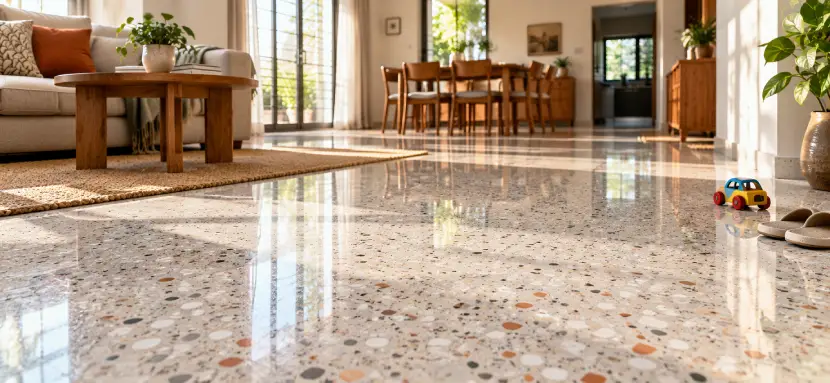
It is in our name, so we’re biased. We’ll still be straight with you. Terrazzo is aggregates of marble, quartz or glass embedded in cement or resin and ground to a smooth, shiny surface. Can last for decades, conceals dirt easily and allows you to select your colours and patterns. It requires both the skill and the preparation of the base, and is more expensive initially than tiles. Does it make the best flooring material for your home? Yes, for some houses. Others prefer to go with the simple vitrified.
Every room wants something different
One floor for the whole house sounds tidy. It rarely works.The best flooring for home kitchens isn’t what you’d want in a bedroom. As it’s normally thought of.
- Kitchen: matt vitrified or granite. Pass on shiny marble and hardwoods. Oil, steam and spills will win.
- Bathrooms: anti-skid tiles with a rough surface. Tiles that are smaller help as well, more grout lines the more how much grip.
- Vitrified, marble, terrazzo or engineered wood are all options for your living room. Just be sure it’s designed to accommodate dragged chairs and a lot of visitors.
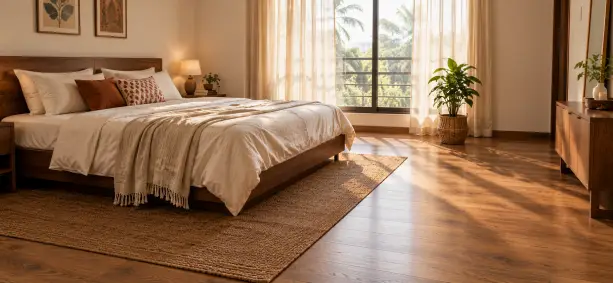
- Bedrooms: a warm and quiet surface underfoot, such as wood, vinyl or wood-look tiles.
- Kids’ room: soft vinyl is easier on knees and wipes clean.
- Balcony: Anti-skid tiles or Kota stone. Store wood and laminate in the house.
- The Pooja room is a marble room or a plain ceramic room which stays cool and can easily be wiped clean.
- Weather is more important than you think:
- Half the year, most of India is hot and half the year, it is damp.
Weather matters more than you'd think
Most of India is hot for half the year and damp for the other half. Tiles and stone cope with both. Wood usually doesn’t. It swells, shrinks and warps once the air turns wet. Live on the ground floor? Damp can creep up from the soil, which is bad news for laminate and solid wood. In a humid area, the best flooring for home starts with tiles and stone, at least in what we’ve seen.
Flat or independent house?
If you live in an apartment, consider weight and noise. Thick slabs add weight, so consult your builder before putting them down. Hard tiles absorb less sound than wood and vinyl.
An independent house gives you more freedom. It also gives you more damp and more dust. A good doormat and a washable rug fix more than you’d expect.
Check how tough it really is
If you live in an apartment, consider weight and noise. Thick slabs add weight, so consult your builder before putting them down. Hard tiles absorb less sound than wood and vinyl.
An independent house gives you more freedom. It also gives you more damp and more dust. A good doormat and a washable rug fix more than you’d expect.
Count the full cost
The price on the box is only the start. You’ll also pay for:
- Labour, adhesive and cement
- Levelling the base, which matters more than most people think
- Skirting and the strips between rooms
- About 10 percent extra tiles for cuts and breakage
- Removing the old floor
- Sealing, polishing or repairs later
A cheap floor that needs fixing every year ends up costing more than a good one you lay once. When people ask us about the best flooring for home value, we look at ten years of cost, not day one.
Pick a look you won't get tired of
Trends move fast. Floors don’t.
Dark floors show dust and footprints. Very light ones show every stain.The most obscured are the mid tones, along with some texture. Large tiles will create less grout line and make a tiny room bigger. Smaller tiles adhere more effectively and are more interesting. The glinty ones reflect light, but they are slippery. Matt feels calmer.
Some day, you’ll be selling or renting out your property? Be neutral buyers want to see their furniture in your home. Apply one material throughout open spaces or two compatible materials. Four floors in one view makes a home feel chopped up.
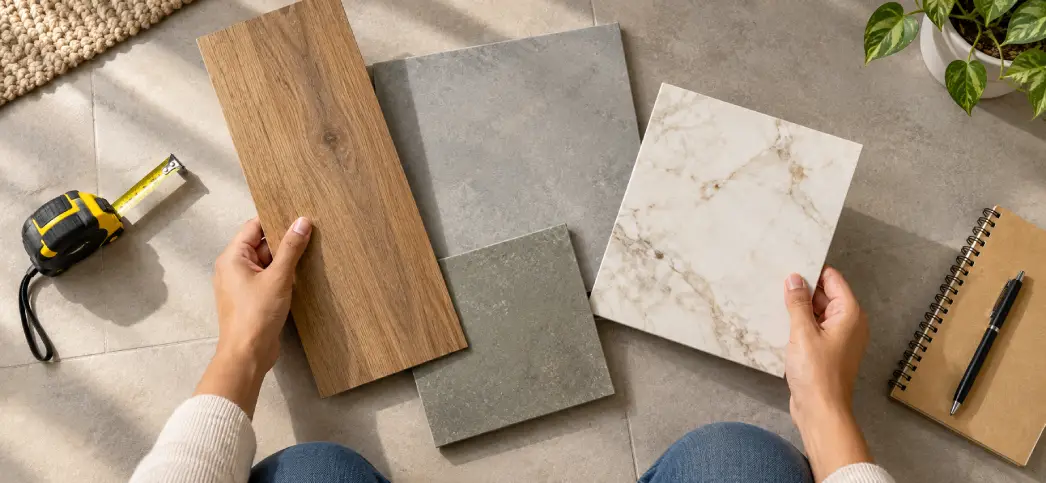
Showroom lights flatter everything.Bring samples home to test in the morning, evening and under your own bulbs. The ideal flooring for interior spaces of the home should be ideal not only in the shop.
Safety first
Slips are the cause of serious injuries, primarily to children and elderly people. Use matt or textured in bathrooms, kitchens and balconies. Low room to room transitions to prevent tripping. With toddlers around, put something softer in the play area. Safety sits at the top of our best flooring for home checklist.
Mistakes we see again and again
- Falling for a photo and skipping the sample
- Ignoring the base, so new tiles crack or sound hollow when you tap them
- Buying too few boxes, then finding the next batch is a slightly different shade
- Picking the lowest quote
- Choosing for today and forgetting tomorrow: a baby, a parent moving in, a new dog
- Never talking to the person who’ll lay it, even though a great tile laid badly looks like a bad tile
Each one costs money, and each one is easy to dodge. Take your time choosing the best flooring for home and you’ll beat most buyers who rush.
Five steps to the best flooring for home
- Record the people who live in the house and how they live.
- State the requirements for each room: wet or dry, busy or quiet.
- Establish a budget and allocate funds for labor, additional tile and maintenance.
- Select 2 or 3 materials and take samples home.
- Before paying, talk to your installer and inspect the base.
Conclusion
Don’t risk a floor; buy one! A sales pitch is not our first step when you visit us at Terrazzo India, our initial action is to consider your home. Take your plans, budget and your list of wants with you. We will demonstrate real examples, talk about the pros and cons transparently and get you to the right flooring for your home, your budget and your family.
Message us or visit Terrazzo India today. Let’s find a floor you’ll still love ten years from now.
Frequently Asked Questions About best flooring for home
1. What's the ideal flooring for the home during hot weather?
Tiles and stone. Tiles (vitrified), Kota stone, marble and terrazzo are cooler to walk on than wood or vinyl.
2. Which of the flooring options is the cheapest?
In most cases, at least for the initial cost, ceramic tiles and laminate. Also look at the repair costs, since the lowest cost floor may not end up being the lowest cost floor.
3. Which is the best flooring for home with kids and pets?
Matt has a tile-fixing ability and is good with vinyl; they’re less prone to damage from spills, scratches and accidents. Avoid using glossy tiles and easily scratched soft woods.
4. Is it possible to install new flooring over old tiles?
Sometimes. When the old floor is solid and level, and is securely attached, it may often be possible to place new tiles or vinyl over the existing surface. This will be slightly raised on the floor, which will impact on doors and thresholds. Have someone look before you go.
5. What are the expected lifespan of a floor?
It is dependent on the type of material and the proper treatment of it. Good tiles, terrazzo and stone can last for decades. Maintain a dry, well-sealed wood and it will last for a long time. These materials are typically shorter-lived, such as laminate or vinyl.