
SPC Flooring vs Laminate Flooring: Which Is Better for Indian Homes?
Summary
SPC and laminate flooring are popular choices for modern Indian homes, but they differ in water resistance, durability, maintenance, and cost.
SPC (Stone Plastic Composite) flooring has a limestone powder and PVC core, making it waterproof and suitable for kitchens, living rooms, and homes with pets or frequent wet mopping. It is durable, dent-resistant, and can often be installed over existing tiles if the surface is flat and stable.
Laminate flooring uses a high-density fibreboard (HDF) core made from compressed wood fibres. It offers realistic wood finishes, a warmer feel underfoot, and a lower initial cost. However, water exposure can cause swelling, making it better suited to bedrooms, studies, and other dry spaces.
Both options offer attractive designs and surface protection against everyday wear, depending on product quality and installation.
For most Indian homes, SPC is the practical choice for moisture-prone areas, while laminate suits dry rooms on a budget. **Terazzo India** helps homeowners choose the right flooring based on their needs and budget.
Share via:
SPC Flooring vs Laminate Flooring: Which Is Better for Indian Homes?
You walk into a flooring shop. The salesman shows you two planks. Both look like wood. Both feel nice. And he says both are great. So now what? If you’re trying to choose between SPC flooring vs laminate flooring, you’re asking the right question. People ask us this at Terazzo India almost every day, so we thought we’d answer it properly, once and for all.
This is something you probably won’t hear from most people. On the first day, both floors look lovely. The problems show up later. Usually after the first monsoon, a few spilled glasses of water, and a lot of daily mopping.
So make yourself a chai and read on. We’ll keep it simple.
First, what are these floors made of?
To understand SPC flooring vs laminate flooring, you need to know what’s inside each plank. When you look at them from the surface, both planks appear nearly identical. Inside, they’re very different.
What is SPC flooring?
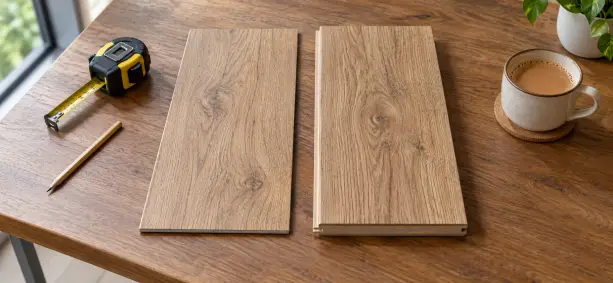
SPC means Stone Plastic Composite. Inside the plank is a layer known as the core, which contains a mix of limestone powder and PVC. The factory presses them together into a hard, solid board.
On top of this core, there’s a printed layer that gives the wood or stone look. Over that, there’s a clear layer that protects the print from wear. Most planks also have a UV coat so the colour doesn’t fade in the sun.
Many SPC planks come with a thin foam sheet stuck to the bottom. It’s called IXPE. Don’t worry about remembering the technical term. Just know it makes the floor softer to walk on and less noisy.
The best part? The core doesn’t take in water. Not even a little.
What is laminate flooring?
Laminate has a core made of HDF. That stands for high density fibreboard. In simple words, it’s tiny wood fibres mixed with glue and pressed very hard into a board.
On top of the HDF, there’s a high quality photo of wood. Then there’s a hard, clear layer on top to stop scratches. Good laminate looks very real. Some even have a grain you can feel when you run your hand over it.
But this is the catch. The core is made from wood. So when water gets in, it acts like wood. In most homes, wet mopping is part of the daily cleaning routine.
Why this matters so much in India
A lot of flooring tips you read online are written for people in cold, dry countries. Our homes are different. Think about a normal Indian house:
- Most of us mop the floor with water every day
- The monsoon brings weeks of damp, sticky air
- Kitchens get oil, water and the odd steel tumbler falling down
- Wet chappals, rain and dust come in through the balcony and front door
- Ground floor homes often get damp coming up from below
That’s a hard test for any floor. And that’s why the SPC flooring vs laminate flooring choice looks very different in Chennai or Coimbatore than it does in a place like Denmark.
SPC flooring vs laminate flooring: how they compare
Let’s look at them one point at a time.
1. Water
This is the biggest difference. And honestly, it’s not a close fight.
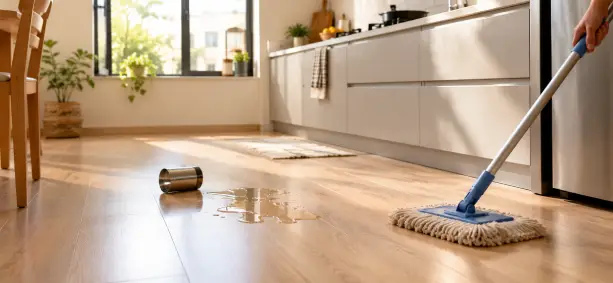
SPC is waterproof. You can spill a full bucket on it, leave it for an hour, and wipe it up later. Nothing happens.
Most laminate can only handle a small spill if you wipe it up quickly. If water gets into the gaps between the planks and reaches the HDF core, the edges start to swell. And once laminate swells, it stays that way. You’ll have to change those planks.
Some newer laminates have special coatings that push water away. They’re better than the old ones. Still, they’re not as good as SPC with water.
If you only remember one thing about SPC flooring vs laminate flooring, remember this: SPC doesn’t mind water. Laminate hates it.
2. Damp weather
Even if you never spill anything, damp air can slowly harm laminate. During extended rainy periods, a wood-based core may expand slightly due to moisture. You might see small gaps, edges lifting up, or hear a hollow sound when you walk on some spots.
SPC doesn’t really react to heat or damp. The planks keep the same shape all year.
Do you live near the sea or in a ground floor flat? Then this point alone might settle the SPC flooring vs laminate flooring question for you.
3. Scratches and dents
Kids running around. Pets with sharp nails. That one chair someone always drags across the room. Floors go through a lot.
Both SPC and laminate have a tough top layer, so they don’t scratch as easily as real wood. In fact, good laminate has a very hard top and handles scratches quite well.
SPC does better with dents.
SPC is generally happy if a pressure cooker lid is dropped, or a heavy sofa is moved. In the event of something heavy landing on the laminate, it can chip at the edges.
this is a little advice from us. When selecting, look at the wear layer of SPC, or the AC rating of laminate. AC rating simply indicates the amount of walking the floor can endure. The higher the AC rating, the longer your floor will look new, the thicker the wear layer.
4. How it feels when you walk on it
Some people like laminate a bit more here. It can feel a little warmer and a little more like real wood when you’re barefoot.
SPC feels firm and solid. With the foam backing, it’s comfortable and quiet. But it’s a heavier, denser material, so a few people say it feels a bit harder.
Also think about sound. Laminate without a good sheet underneath can make a clicking or hollow sound when you walk. SPC with foam backing is usually quieter.
5. Looks
Both look really good now. The printing is so good that most guests won’t know it’s not real wood.
Laminate has been around for longer, so there are lots of wood colours and textures to pick from. SPC has caught up quickly, and it also comes in stone, marble and concrete looks.
When it comes to looks, SPC flooring vs laminate flooring is pretty much a draw. Want a teak or walnut shade? You’ll find it in both.
6. Fitting the floor
Both are usually fitted as a “floating floor.” That just means the planks click into each other and sit on top of the floor below. No glue. No nails. It’s quick and clean, and much less mess than breaking old tiles.
The difference is what you can lay them on. SPC can often go right on top of your old tiles, as long as the tiles are flat and the gaps between them aren’t too deep. That means no breaking, no dust and no extra days of chaos at home.
Laminate also floats, but the floor below must be dry. It usually needs a plastic sheet underneath to stop damp, especially on the ground floor. Skip that, and you’re inviting trouble.
7. Cleaning
This is a big one for Indian homes.
SPC is easy to clean. Sweep it, then mop it with a wet cloth and a mild cleaner. You can keep your normal mopping habit.
Laminate needs more care. Use a dry mop or a cloth that’s only a little damp. Don’t pour water on it. Don’t use a dripping mop. Don’t leave wet slippers near the door. If someone at home mops with a full bucket of water, laminate won’t last long.
For everyday cleaning, SPC flooring vs laminate flooring isn’t even a contest. SPC wins.
8. Price
Laminate is usually cheaper per square foot when you buy it. If your budget is tight and you’re only doing dry rooms, that saving really helps.
SPC costs a bit more at the start. But it handles damp much better, and you’ll replace fewer planks over time. So in wet areas, it often costs you less in the long run. And if you can lay it over your old tiles, you also save the money you’d spend on breaking them.
Prices change a lot based on the brand, the thickness and the wear layer. So always get a quote for your own space before you decide.
9. How long it lasts
Good SPC, fitted the right way, can last 20 years or more in a normal home.
Laminate can also last many years in a dry room that’s looked after well. But in damp areas, it can get damaged quickly, sometimes in just a few years.
In the long run, SPC flooring vs laminate flooring really depends on one thing: which room the floor goes in.
SPC flooring vs laminate flooring side by side
| What we're checking | SPC Flooring | Laminate Flooring |
| What the core is made of | Limestone powder + PVC | HDF (pressed wood fibres) |
| Water | Waterproof | Handles only small spills |
| Damp weather | Stays the same | Can swell in long rainy spells |
| Dents | Handles them well | Edges can chip |
| Feel | Firm, quiet with foam backing | A bit warmer, more like wood |
| Over old tiles | Usually possible | Needs a dry, flat floor and a damp sheet |
| Mopping | Wet mop is fine | Dry or slightly damp mop only |
| Price at the start | Higher | Lower |
| Best for | The whole house, even kitchens | Bedrooms, study and other dry rooms |
Which floor for which room?
When people ask us about SPC flooring vs laminate flooring for each room, this is roughly what we tell them.
Living room: Either one works. If it opens to a balcony or gets mopped a lot, pick SPC.
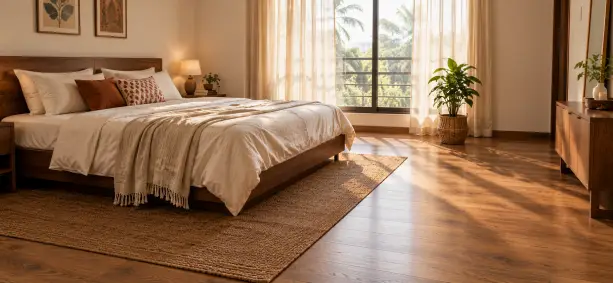
Bedrooms: Laminate is a nice choice here. Bedrooms usually stay dry, and laminate feels warm under your feet.
Kitchen: SPC. No doubt about it. Water, oil and falling vessels are part of daily life there.
Kids’ rooms: SPC. Spilled juice, paint, toy cars. You get the idea.
Homes with pets: SPC handles water bowls and little accidents with no trouble.
Bathrooms: Don’t use laminate. SPC can work in the dry part of a bathroom, but in the shower area, tiles are still the safer choice.
Study or home office: Laminate does the job and saves you some money.
When laminate is still a good pick
We’re not saying laminate is bad. It’s not.
Laminate is a good choice if:
- You’re doing bedrooms or a study that don’t get wet
- You live on an upper floor with no damp issues
- You want a warm, wood like floor for less money
- Your family is fine with dry mopping
In these cases, laminate gives you a lovely floor at a lower price. We’d happily suggest it.
Mistakes we often see
- Picking laminate for the kitchen because it looked nicer in the shop
- Not putting a damp sheet under laminate on the ground floor
- Laying SPC on uneven tiles without making them flat first
- Choosing the thinnest wear layer to save a little money
- Not thinking about how the house actually gets cleaned
That last one is bigger than it sounds. The way your floor gets mopped every day can decide which floor lasts and which one doesn’t.
So, which one is better for Indian homes?
If we had to choose one floor for most Indian homes, we’d choose SPC. It handles water, damp air and daily wet mopping, and most of our homes deal with all three. It can also go over old tiles in many cases, which makes the whole job much easier.
Laminate is still a smart choice for dry rooms and smaller budgets. Lots of homes use both. SPC in the kitchen, living room and kids’ rooms. Laminate in the bedrooms.
So the simple answer to SPC flooring vs laminate flooring is this: pick the floor that suits the room.
Conclusion
You’ll walk on this floor every day for years. So it should suit how your family really lives, not just look good in a shop photo.
At Terazzo India, we help people with the SPC flooring vs laminate flooring question all the time. We’ll ask how you use each room. We’ll show you samples you can touch and compare. And we’ll tell you honestly what fits your home and your budget. No pressure. No confusing sales talk.
Get in touch with the Terazzo India team today, and let’s find the right floor for your home together.
Frequently Asked Questions About SPC Flooring vs Laminate Flooring
1.Is SPC better than laminate for Indian weather?
Yes, for most houses in India! In the conditions of hot, damp or rainy rooms, laminate flooring will absorb the moisture and swell, whereas the core of SPC flooring does not absorb the moisture.
2. Can SPC floor be installed over my existing tiles?
Often, yes. Tiles should be sturdily made, flat and not have too deep a gap between them. You can easily determine if you have a ready floor at home.
3. Is it okay to use laminate flooring in the kitchen?
We wouldn’t. Too much water and oil in kitchens and laminate edges may swell with time.
4. Which option costs the less, SPC or laminate?
The cost of laminate tends to be less expensive initially. SPC is more expensive initially, but can endure longer in wet conditions and therefore may be more cost effective.
5. Is SPC flooring cool?
Not really. Firm but comfortable, particularly with the foam backing. It is also easier to walk on than normal vitrified tiles because it is hotter to walk on.