
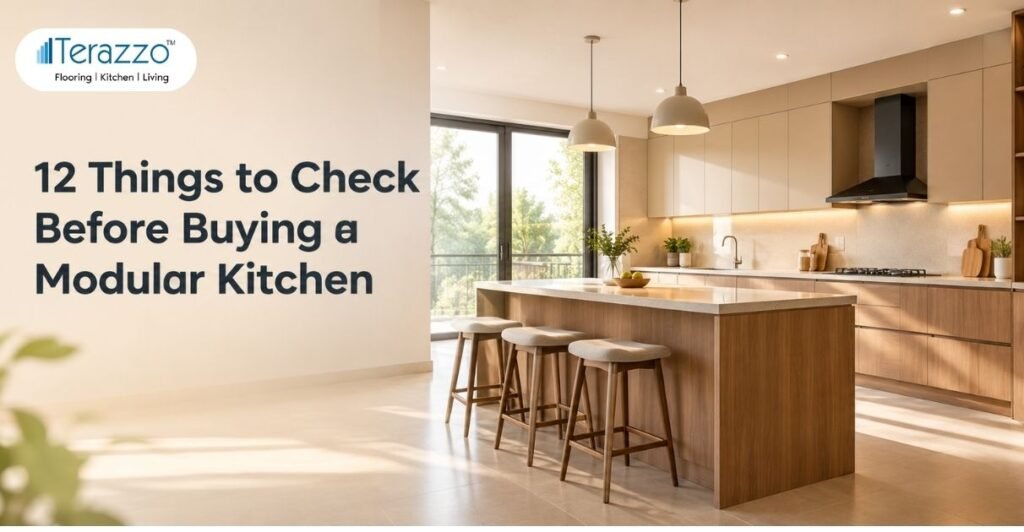
12 Things to Check Before Buying a Modular Kitchen
Summary
Buying a modular kitchen is a long-term decision, so it is important to look beyond colours and showroom designs. This guide covers 12 key things homeowners should check before making a purchase, including the kitchen layout, materials, shutter finishes, hardware, waterproofing, storage needs, and countertop options. Each of these choices affects how durable, practical, and comfortable the kitchen will be over time.
The guide also explains the importance of proper ventilation and lighting, clear quotation breakdowns, installation timelines, warranty terms, and after-sales support. Homeowners are encouraged to understand exactly what they are paying for and to ask questions about materials, costs, service, and installation before committing. Visiting a real kitchen that has been in use can also give a better idea of how the design and materials perform in everyday life.
Finally, the blog highlights common mistakes such as choosing a design purely from Pinterest, ignoring hardware, accepting unclear pricing, or rushing into a purchase because of a discount. Overall, the message is simple: choosing the right modular kitchen is about more than appearance. Careful attention to quality, functionality, durability, pricing, and long-term support can help homeowners make a confident decision and enjoy their kitchen for years.
Share via:
12 Things to Check Before Buying a Modular Kitchen
Buying a new kitchen is a big decision. It is not like buying a sofa you can swap out in two years. A kitchen stays with you for a decade, sometimes longer. That is why we put together this modular kitchen buying guide: so you know what to ask before you sign anything, not after.
Maybe you are moving into a new flat in Coimbatore. Maybe you’re finally fixing that old kitchen you have been living with for years. Either way, this modular kitchen buying guide covers what actually matters.
We have seen both sides at Terazzo. Clients who fell for a shiny showroom sample and regretted it within six months. And clients who did their homework and still love their kitchen five years later. The difference almost always comes down to one thing: knowing what to check before you buy, not just what looks good on the day you sign the order.
So make yourself a cup of chai and let’s get into it.
Why a Checklist Actually Helps
Most people start kitchen shopping by picking colours and handles first. Fair enough, that is the fun part. But a kitchen is really a bunch of things working together: layout, material, hardware, and the quality of the actual work. Miss one, and the whole thing feels off, even if it looks lovely in photos.
This modular kitchen buying guide is not here to bury you in technical terms. It is just a simple list, in plain language, so you walk into a showroom feeling sure of yourself instead of confused. Twelve points, straight talk, no fluff. That’s all you need to ask the right questions before you spend your money.
1. Know Your Kitchen Layout First
Before you even glance at colours or finishes, sort out your layout. This is step one in any real modular kitchen buying guide, and it’s the step most people skip.
A few layouts you will run into:
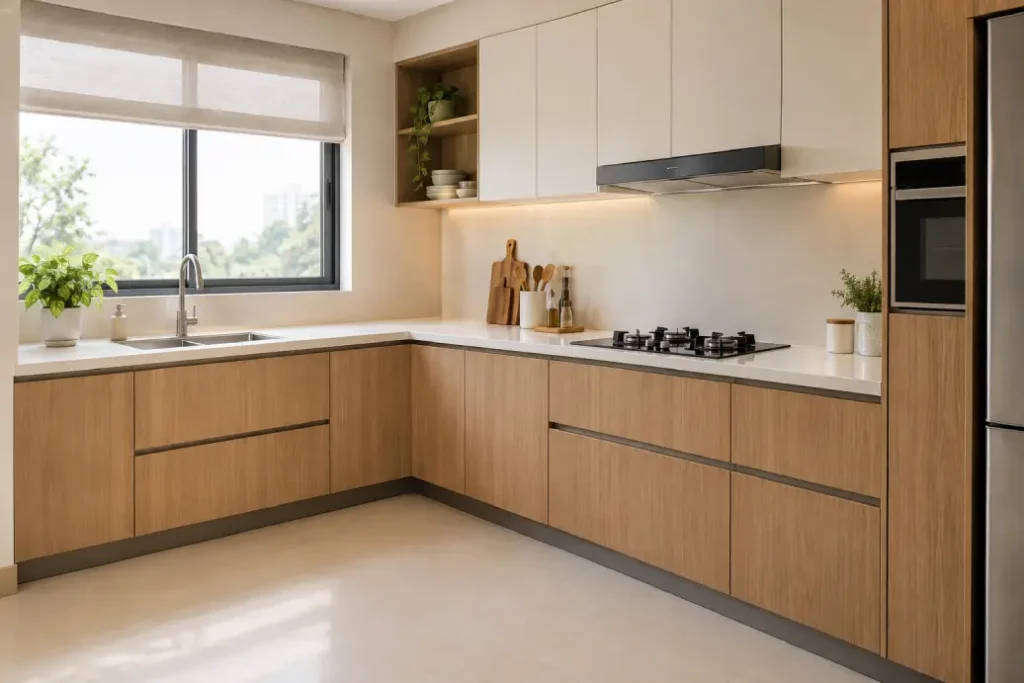
- L shaped: works well for small to medium kitchens, keeps everything within reach
- U shaped: good if you have got the space and want storage on three sides
- Parallel (galley): fits narrow kitchens where two counters face each other
- Island layout: for open homes that want a cooking space people can gather around
Your layout decides how you move around while cooking, how much you can store, and honestly, how much you will enjoy being in there. Get it wrong, and no fancy finish will save it later. This is exactly why layout sits at the top of every proper modular kitchen buying guide.
2. Understand the Material Options
Modular kitchens are built from different core materials, and they do not all handle moisture, heat, and daily wear the same way. This is the short version:
- Plywood (BWP grade): strong, handles moisture well, a safe pick for Indian kitchens
- MDF (Medium Density Fibreboard): gives a smooth finish, good for painted shutters, but not great with water
- HDHMR: denser than MDF, holds screws better, copes with humidity
Any honest modular kitchen buying guide will tell you plywood is still the most trusted choice in Indian homes. Our kitchens deal with a lot of steam and spills, and plywood simply holds up better through that.
Ask your designer to show you an actual cut sample of the board. If a brand trusts its material, it won’t hesitate to let you see the layers.
3. Check the Shutter Finish Carefully
The shutter is what you look at every day. It is the face of your kitchen. A few common finishes:
- Laminate: budget-friendly, tough, comes in a huge range of designs
- Acrylic: glossy and modern, but shows fingerprints fast
- PU (Polyurethane): richer finish, resists scratches, costs a bit more
- Membrane: smooth, no visible joints, suits a minimal look
Ask for real shutter samples, not a photo on someone’s phone or a tiny swatch card. Colours look different under kitchen lighting than they do in a bright catalogue shot. This one step saves a lot of regret later.
4. Don't Ignore the Hardware
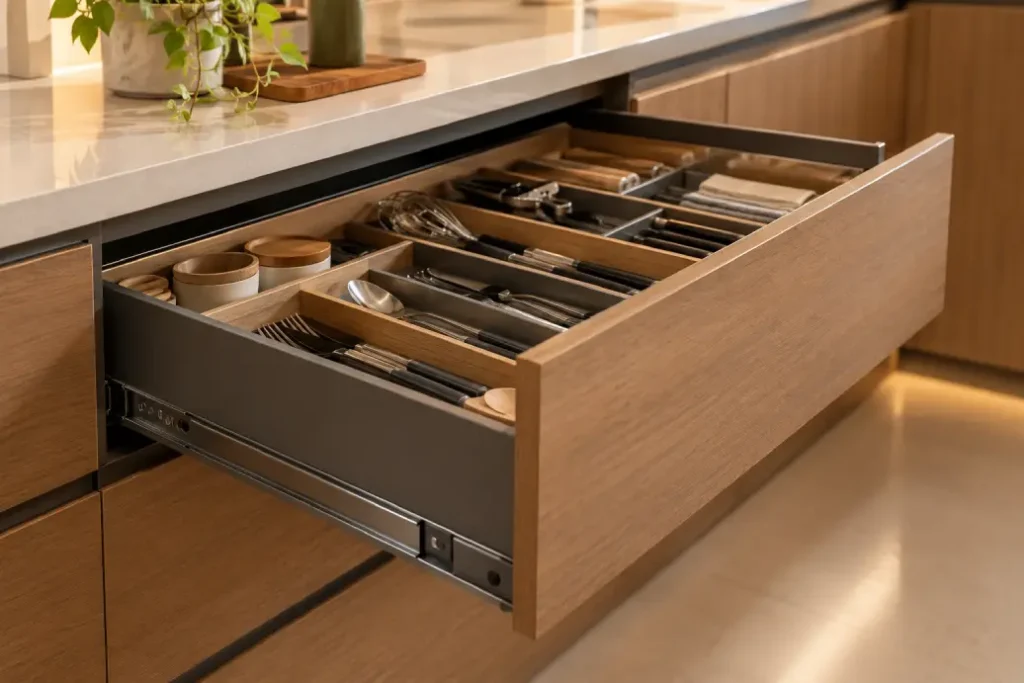
People forget to check this, and funnily enough, it is the first thing that fails. Hinges, channels, and drawer systems take more daily beating than the shutters ever will.
Things worth checking:
- Soft close hinges, so cabinets don’t slam every time someone shuts them
- Telescopic or tandem channels for drawers that actually glide
- How much weight the baskets and pull outs can hold
Cheap hardware is where “affordable” kitchens quietly cut corners. It’s one place you really should not compromise on. A brand that talks openly about its hardware brands and warranty is one worth trusting. Any solid modular kitchen buying guide will tell you hardware matters just as much as the shutter you fell in love with.
5. Ask About Waterproofing
Kitchens see water every single day: washing vessels, boiling, wiping counters, the odd splash near the sink. If the carcass (the box behind the shutters) is not properly waterproofed, it swells and weakens over time. Sometimes within a year.
Ask these directly:
- Is the plywood BWP (Boiling Water Proof) grade?
- Are the edges sealed with PVC or ABS banding to keep moisture out?
- Is there a written warranty against water damage?
This one point can save you years of frustration, so do not skip it in your modular kitchen buying guide checklist. Water damage stays quiet at first and gets expensive fast.
6. Measure Your Storage Needs Honestly
Storage is not about squeezing in as many cabinets as possible. It is about matching storage to how you actually cook, not how a showroom kitchen looks.
Think through:
- How many people cook in your kitchen regularly
- Whether you stock up in bulk or buy small quantities often
- Appliances you need space for: mixer, oven, microwave, water purifier
- Pull outs for masalas, bottles, and things you reach for constantly
A good designer asks you these questions before drawing anything. If they skip straight to the design, that’s worth noticing.
7. Check the Countertop Material
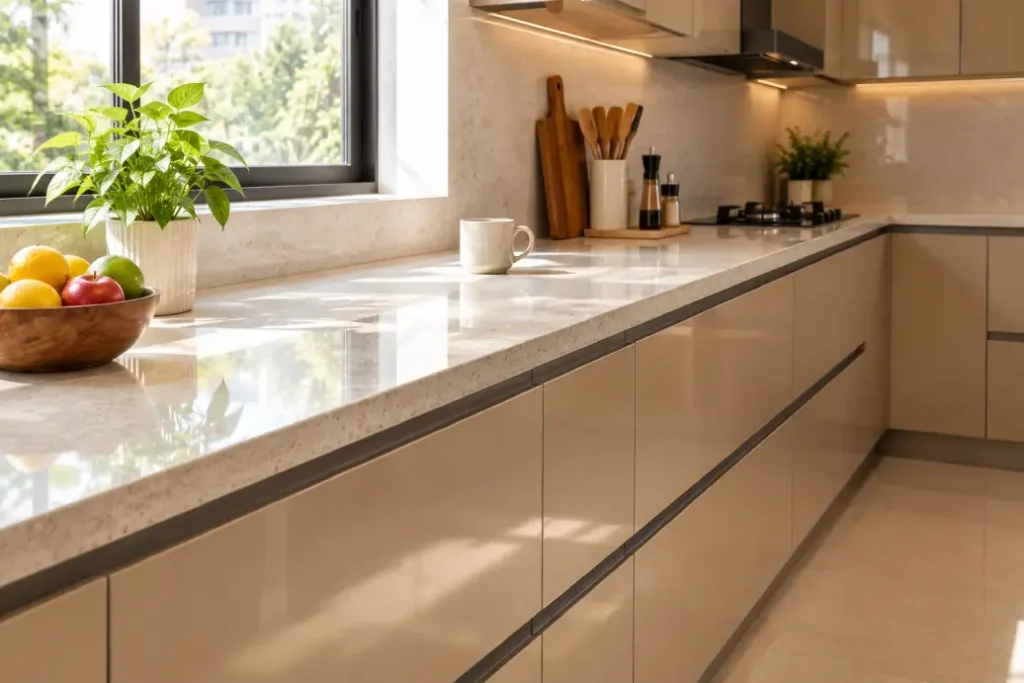
Your countertop takes the biggest hit in the whole kitchen: hot vessels, knives, spills, all of it lands there. Common choices:
- Granite: tough, handles heat well, available almost everywhere
- Quartz: doesn’t absorb liquids, low maintenance, a little pricier
- Engineered stone: a decent middle ground between looks and durability
Steer clear of anything too porous unless you are fine with regular sealing. This matters more than people realise when they’re comparing quotes, and it’s something every modular kitchen buying guide should walk you through.
8. Look at Ventilation and Lighting
A gorgeous kitchen with weak ventilation turns smoky and sticky within weeks. Before you finalise the design, check:
- Chimney placement and suction power (measured in m³/hr)
- Where the exhaust fan or window sits relative to your cooktop
- Task lighting under cabinets for actual cooking and chopping
- Ambient lighting for the overall feel of the space
Good lighting is not just about looks. It about seeing what you are chopping at 9 pm on a tired weekday. It’s usually the last thing people think about, and the first thing they wish they’d sorted properly.
9. Understand the Quotation Breakdown
This is where people get confused, and honestly, where some brands get a little sneaky. A fair quote separates:
- Carcass cost
- Shutter cost
- Hardware and accessories
- Countertop
- Installation charges
- Appliances, if they’re part of the package
If a quote is just one lump sum with no breakdown, ask why. A brand you can trust will explain every line item without hesitation. That is exactly what a proper modular kitchen buying guide should protect you from: pricing that hides costs until later.
10. Ask About Installation Timelines
Kitchens do not go up overnight, but they should not take forever either. A typical modular kitchen takes about 3 to 6 weeks from measurement to installation, depending on how complex the design is.
Before you commit, ask:
- What is the expected timeline from order to installation?
- Who coordinates the plumbing and electrical work on site?
- What happens if a material shipment gets delayed?
Clear answers here usually mean the brand has its process figured out. Vague answers about timelines often mean vague answers about everything else too.
11. Check Warranty and After-Sales Support
A kitchen is not a one time purchase, no matter how well it’s built. Things need the odd fix: a hinge loosens, a drawer sticks, a shutter needs realigning. What matters is how the brand handles it once your cheque has already cleared.
Ask about:
- Warranty periods for hardware, shutters, and carcass, listed separately
- How fast they respond to a service request
- Whether spare parts are still easy to get years later
A brand confident in its work will be upfront about warranty terms. No hesitation, no vague replies, no fine print surprises later.
12. Visit a Live Site, Not Just a Showroom
Showrooms are built to look perfect. That is their whole job. A live, working kitchen tells you the real story a display unit never will. If a brand can show you a kitchen that’s been in daily use for a year or two, take them up on it.
You will spot things a showroom won’t show you:
- How the finish actually holds up under daily use
- Whether the drawers still glide the way they did on day one
- How the family genuinely feels about their kitchen now, not on installation day
More than any other point here, this step tells you what you are really signing up for. It is the part of the modular kitchen buying guide most people skip, and probably shouldn’t.
Common Mistakes to Avoid
A few slip ups we see again and again:
- Picking a design purely off Pinterest without checking if it fits your space
- Skipping the hardware conversation because it feels too technical
- Never asking who’s responsible if something goes wrong after installation
- Rushing the decision because of a “limited time” discount
- Treating this modular kitchen buying guide as something to skim instead of actually going through it, room by room
None of these mistakes look big on their own. Together, they’re exactly what turns a dream kitchen into a daily headache.
A Quick Recap Before You Decide
Buying a modular kitchen is not complicated once you know what to look for. Layout, materials, hardware, waterproofing, storage, countertop, ventilation, honest pricing, timelines, warranty, and a real site visit. Twelve checkpoints, and together they cover what matters.
Skip a couple of these, and you might end up with a kitchen that looks great for a few months and starts giving trouble after. Go through this modular kitchen buying guide, ask the right questions at every step, and you’ll walk into your decision with confidence instead of a guessing game.
Conclusion
At Terazzo, we design kitchens for how you actually cook and live, not just for how they photograph on handover day. Our team walks you through every material, every cost, and every small detail. No vague quotes, no surprises later.
If you’re in Coimbatore and starting your kitchen search, come talk to us. We’ll help turn this modular kitchen buying guide into an actual kitchen you’ll love using every day, for years, not just for the first few months.
Get in touch with Terazzo today, and let’s plan your kitchen the right way.
Frequently Asked Questions About Modular Kitchen Buying Guide
What are the items required for a modular kitchen?
Cabinets, countertop, sink, hob, chimney, and hardware like hinges and channels, plus a few add ons like lighting and pull outs.
What is the 3 kitchen rule?
It’s the kitchen work triangle: sink, stove, and fridge placed close so you’re not walking around too much.
What are 10 kitchen safety rules?
Keep knives away from kids, never leave the stove unattended, wipe spills fast, keep dry hands near switches, and have a first-aid kit close by.
What are the disadvantages of a modular kitchen?
Costs more upfront, and repairs often need the same brand’s parts, which isn’t always convenient.
Which type of modular kitchen is best?
Depends on your space really, L-shaped suits smaller homes, U shaped or island works better for bigger ones.