
Wallpaper vs Paint: Which Is Better for Indian Homes?
Summary
Wallpaper and paint each have their own strengths, and the best choice depends on your home’s needs rather than following a single trend. Paint is generally more affordable upfront, easier to refresh, and ideal for homeowners who like changing colors or are working within a budget. Wallpaper, on the other hand, offers premium textures, patterns, and long-lasting visual appeal, making it an excellent option for creating feature walls and adding character to interiors.
For Indian homes, climate and room conditions play a major role in deciding between wallpaper and paint. High humidity, poor ventilation, and direct sunlight can affect both finishes differently, so choosing the right material for each room is more important than choosing one option for the entire house. Washable paint or vinyl wallpaper works well in high-traffic areas, while bedrooms and home offices benefit from decorative wallpaper. Bathrooms and kitchens are generally better suited to waterproof paint or tiles because of constant moisture and grease exposure.
The blog concludes that there is no universal winner in the wallpaper vs paint debate. Instead, combining both often delivers the best results—using paint for practicality and wallpaper as an accent to enhance aesthetics. Terazzo recommends evaluating factors such as airflow, moisture, sunlight, room usage, and long-term maintenance before making a decision, ensuring homeowners choose a wall finish that suits their lifestyle, budget, and local climate.
Share via:
Wallpaper vs Paint: Which Is Better for Indian Homes?
Almost every client who walks into our Terazzo center asks us this in the first five minutes. Wallpaper vs paint, which one should I go with?
Fair question, honestly. Indian homes deal with stuff a Pinterest board never has to think about. Humidity that makes walls feel sticky by June. Kids who treat every wall like a drawing sheet. A monsoon that tests every material in the house. So wallpaper vs paint here isn’t just about looks. It’s about what survives an Indian summer, an Indian monsoon, and an Indian toddler holding a crayon.
We’ve worked on enough homes across Coimbatore, Chennai, and Bangalore to know there’s no single right answer here. But there is a right answer for your home, and that’s what we want to help you find.
This is the part nobody tells you at the paint shop. Picking a good wall finish for Indian homes isn’t about what looks nice on a sample card under showroom lights. It’s about what still looks nice two monsoons later. We’ve watched a lovely paint job turn patchy within a year, just because the room had no airflow. We’ve also seen wallpaper hold up for ten years because someone bothered to prep the wall properly first. The difference almost always comes down to picking the right thing for that room, not the trend of the month.
So let’s actually go through this. Room by room, rupee by rupee, no sales pitch attached.
Wallpaper vs Paint Isn't Really an Either Or
Most people treat this like one big decision for the whole house. Pick a side, live with it for ten years, hope it was the right call.
It doesn’t have to work like that.
We’ve seen homes with plain paint in the living room and wallpaper on just the one wall behind the bed. We’ve seen kitchens skip both for tile, while the study next door gets a textured wallpaper that hides scuff marks nicely. So the real wallpaper vs paint question isn’t which one wins overall. It’s which one wins in each room, for your family, in your city.
Keep that in mind as you read on. Nobody’s asking you to pick a team.
Cost: What Wallpaper vs Paint Actually Costs You
Money first, since that’s usually what settles the argument anyway.
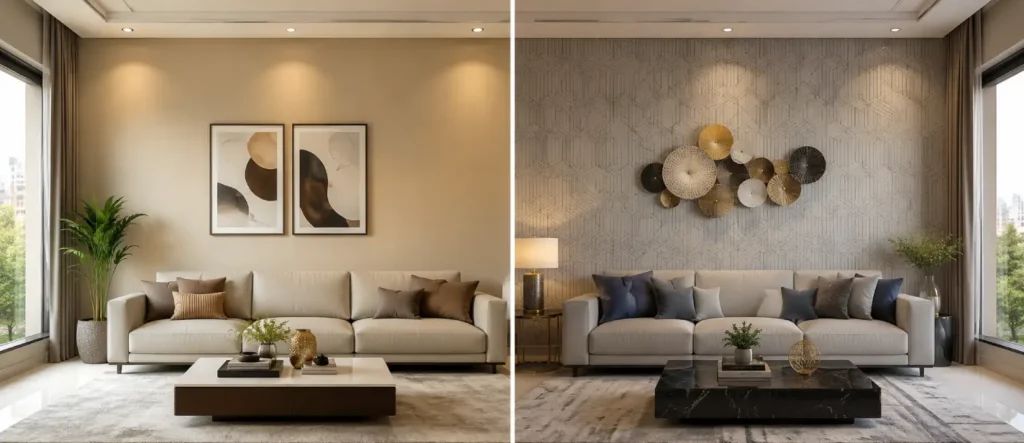
Paint costs less upfront. A basic paint job for a mid sized flat in India costs less than a wallpaper job, materials and labour both counted. If your budget’s tight, paint wins this one, no contest.
Wallpaper costs more at the start, but the math shifts if you stick around long enough. Good wallpaper can go 8 to 10 years without needing a touch up. Paint, especially in humid or coastal cities, often needs a fresh coat every 3 to 4 years because of damp patches or just general wear.
So on a five year plan, paint looks cheaper. Stretch that out to ten years, and wallpaper starts catching up in quite a few homes.
There’s a hidden cost too, one people forget. Every repaint means paying for masking, priming, cleanup, all over again. Wallpaper, once it’s up, doesn’t ask for that kind of repeat spend for years. If you hate having painters camped out in your living room every few years, that’s worth something, even if the first bill looks bigger.
One more thing worth knowing. Taking down old wallpaper isn’t always simple. If it was stuck on with strong adhesive, pulling it off can mean scraping, steaming, sometimes patching the wall before anything new goes up. Paint doesn’t have this problem. You just sand it down and recoat. Worth thinking about if you might change your mind on the design in a few years.
Durability: How They Actually Hold Up in Indian Weather
This is where wallpaper vs paint gets real for Indian homes specifically, and where a lot of the internet advice falls apart because it’s written for a different climate.
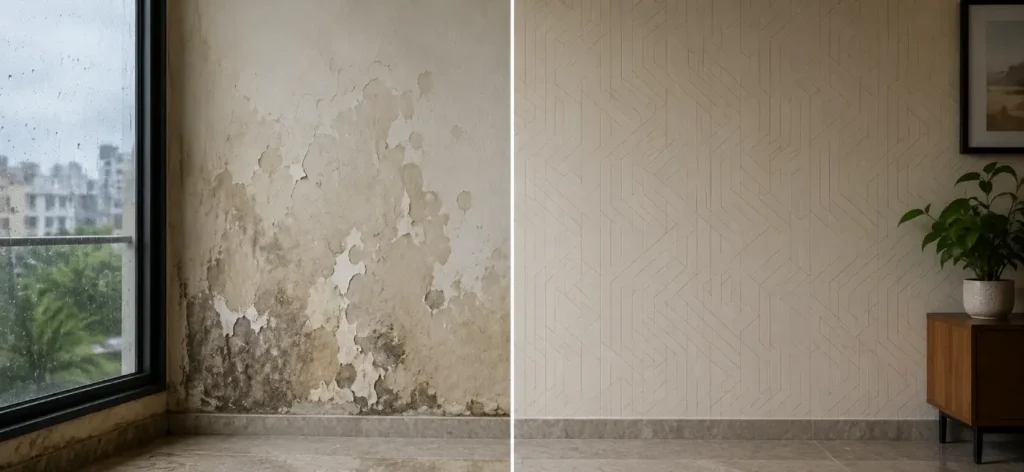
Paint and humidity. Regular paint can develop damp patches, peel, or grow fungus in high humidity zones, especially near the coast or in rooms with poor airflow. You’d need a waterproof paint for that, and that costs more, and even then it’s not a guarantee.
Wallpaper and humidity. This one actually surprises most people. Plain paper wallpaper does worse in humidity than paint. It bubbles, peels at the edges, sometimes grows mold if the wall wasn’t sealed properly to begin with. But vinyl coated wallpaper handles moisture a lot better, better than basic paint in some cases, if we’re being fair about it.
So this is the honest takeaway. If your home has decent airflow and dry walls, wallpaper vs paint durability really comes down to the quality of the product, not the material itself. If you’ve got a naturally damp room, say a ground floor flat, or a room that barely sees sun, go with a good waterproof paint or a vinyl wallpaper. Skip the plain paper wallpaper there, it just won’t hold.
We tell people in Coimbatore and Chennai this constantly. Check your wall before you check the catalogue. Run your palm across a bare wall on a humid morning. If it feels even slightly damp, that room needs a moisture friendly option first, wallpaper vs paint debate aside. No finish, however expensive, survives long on a wall that’s already fighting moisture from the inside.
Sun matters too, and people forget this one. Rooms that catch harsh afternoon sun for years can see paint fade or go chalky, especially the cheaper brands. Wallpaper, dark prints in particular, can fade unevenly if one side of the wall gets more light than the other. If a room gets strong western sun, ask about UV resistant paint or sun-rated wallpaper before you decide either way.
Maintenance: Who's Actually Easier to Live With?
Nobody thinks about maintenance until the wall already looks tired. So let’s get ahead of that.
Paint maintenance is fairly simple. Wipeable if you’ve gone with washable emulsion. Small marks can be spot touched with leftover paint from the can you kept. A full repaint every few years, depending on your city’s weather.
Wallpaper maintenance depends a lot on the type. Vinyl wallpaper wipes clean without much fuss. Plain paper wallpaper stains more and is genuinely harder to spot clean. Tears and lifted edges show up over time, especially in busy spots.
If you’ve got small kids or pets running around, this matters more than it sounds. Washable paint or vinyl wallpaper both survive crayons and scratches reasonably well. Basic paper wallpaper does not, and it shows fast. Keep that in mind before you fall for a pretty print in a catalogue.
We’ve had clients call us a year after a wallpaper job asking how to fix a corner that’s peeling near the door frame, usually because that exact spot gets brushed against every single day without anyone noticing. If a wall gets a lot of contact, corridors, near switches, behind chairs that get pushed back and forth, paint is just easier to live with. Save the wallpaper for walls people mostly look at, not the ones they touch.
Ceiling height matters too, though almost nobody thinks of it upfront. High ceilings make wallpaper seams harder to hide and harder to fix once they lift. A standard flat ceiling, around 9 to 10 feet, works fine either way. Got a double height living room? Get a proper opinion before choosing wallpaper there, it’s a different game entirely.
Design Flexibility: Where Wallpaper Pulls Ahead
This is the one spot where wallpaper vs paint isn’t even close, if we’re being honest.
Paint gives you color. Wallpaper gives you texture, pattern, and a kind of depth flat color just can’t touch. Want a leafy print behind the bed? A bold geometric pattern in the study? A stone look texture running down the hallway? That’s wallpaper’s job, not paint’s.
We say this to clients a lot. If you want your home to feel put together without hiring a full design team, one wallpapered wall does more work than an entire room painted plain. It’s the fastest route to a space that feels like someone actually thought about it.
That said, paint has its own tricks these days. Custom color mixing, two tone walls, textured finishes like Italian marble or lime wash. Paint has come a long way from flat white walls sitting there doing nothing. The gap between wallpaper vs paint on design has closed a bit over the years, but wallpaper still wins on texture and pattern, hands down.
There’s also the question of how often you like changing things up. Paint is forgiving if you can’t decide. Repaint a wall in an afternoon and you’ve got a whole new mood by evening. Wallpaper asks for more commitment. You’re not swapping it out every time Pinterest shows you something new and shiny. If you redecorate often, lean paint. If you find something you genuinely love, wallpaper rewards the patience.
A small tip from our own projects, for what it’s worth. Pairing both usually beats picking just one. A calm paint color across the room with a single wallpapered wall gives you the best of both, a quiet base with one point that catches the eye. It’s also a lot lighter on the wallet than wallpapering an entire room.

Does It Affect Resale Value?
If you might sell or rent this place out someday, this is worth thinking about now.
Most buyers and tenants in India prefer neutral, freshly painted walls. It’s easier for them to picture their own furniture against a plain wall than someone else’s bold wallpaper choice staring back at them. That floral print you love could be exactly what puts off the next buyer walking through your door.
If resale is even a small worry, keep wallpaper to one wall you could easily paint over later, instead of the whole flat. Paint, being neutral and quick to refresh, tends to help more during a sale or a rental handover.
Common Myths About Wallpaper vs Paint
A few things people still believe that just aren’t true anymore.
Wallpaper always looks fake or plasticky. Not really, not today. Textured and fabric look wallpapers have come a long way. Good ones are genuinely hard to tell apart from hand finished plaster or actual fabric, at least from a normal viewing distance.
Paint is always the safe, boring option. Also not true. Textured paint, two tone walls, and accent colors can look just as striking as wallpaper, sometimes more so, depending on the room and the light.
Wallpaper doesn’t last in India. It does, if you pick the right grade for the room and someone installs it properly. The failures we’ve seen almost always trace back to bad wall prep, or picking the wrong wall finish for Indian homes with that much humidity, not the wallpaper itself.
Once you paint a wall, you can’t add texture to it. You can. Stucco, lime wash, and textured paints all add real depth without needing wallpaper at all.
Which Rooms Actually Suit Which Option
We get asked this room by room all the time, so here’s our honest, no fuss take.
Living room. Either works fine. Want a statement wall, go wallpaper. Want the freedom to change color on a whim later, go paint.
Bedroom. Wallpaper works beautifully here, especially right behind the headboard. It’s a low traffic zone, so wear and tear barely matters.
Kids’ room. Washable paint, no question asked. Kids and delicate wallpaper just don’t get along, ever.
Kitchen. Skip both if you can manage it. Tile or washable paint at most. Grease and steam are rough on wallpaper over time.
Bathroom. Waterproof paint only, full stop. Wallpaper and constant moisture don’t mix, even the vinyl kind struggles long term near a shower wall.
Home office or study. Wallpaper adds character without fighting your work setup. A soft, muted texture works nicely in here.

So, Wallpaper vs Paint: What's the Honest Answer?
If we had to give you one straight answer,this is it. Paint for budget and everyday practicality, wallpaper for character and texture. Most homes we’ve worked on actually end up using both, paint doing the heavy lifting, wallpaper adding the accent.
Wallpaper vs paint was never really about which one wins overall. It’s about matching the material to the room, the weather outside, and how your family actually lives day to day. A rental home usually leans paint. A long term home with some budget to spare can afford to layer both.
How Terazzo Approaches This With Every Client
We don’t hand you a copy paste answer the moment you ask us wallpaper vs paint. We walk your space first. We check airflow, sunlight, moisture, foot traffic, how each room actually gets used on a normal Tuesday. Then we suggest the wall finish for Indian homes that fits yours specifically, not whatever’s trending on Instagram this month.
Our experience centers in Coimbatore, Chennai, and Bangalore let you touch and feel both materials before committing to either one. Textures, finishes, patterns, you get to run your hand over all of it instead of guessing off a swatch book at home.
So if you’re stuck between wallpaper vs paint for your home, just walk in and talk to us. We’ll show you what actually holds up for your walls, your weather, and your family. No generic advice, just what genuinely works in your specific space.
Frequently Asked Questions
1. Which is better for Indian homes: wallpaper or paint?
The best choice depends on your budget, room type, and local climate, as both have unique advantages.
2. Does wallpaper last longer than paint?
Yes, quality wallpaper can last 8–10 years, while paint usually needs repainting every 3–5 years.
3. Is wallpaper good for humid Indian weather?
Yes, vinyl wallpaper works well on dry, properly prepared walls, but waterproof paint is better for damp areas.
4. Can I use wallpaper and paint together in the same home?
Absolutely, combining paint with a wallpaper feature wall offers the perfect balance of style and practicality.
5. Which rooms are best suited for wallpaper?
Wallpaper is ideal for living rooms, bedrooms, and home offices, while paint is better for kitchens, bathrooms, and kids’ rooms.