
Interior Design Mistakes to Avoid in 2026
Summary
Many homes look beautiful during handover day. However, practical problems often start appearing after daily use. Poor storage, bad lighting, overcrowded layouts, weak ventilation, and rushed material choices slowly make interiors feel uncomfortable over time.
In this blog, we discuss common interior design mistakes homeowners still make in 2026 and how smarter planning can help create homes that feel practical, functional, and comfortable for years.
Share via:
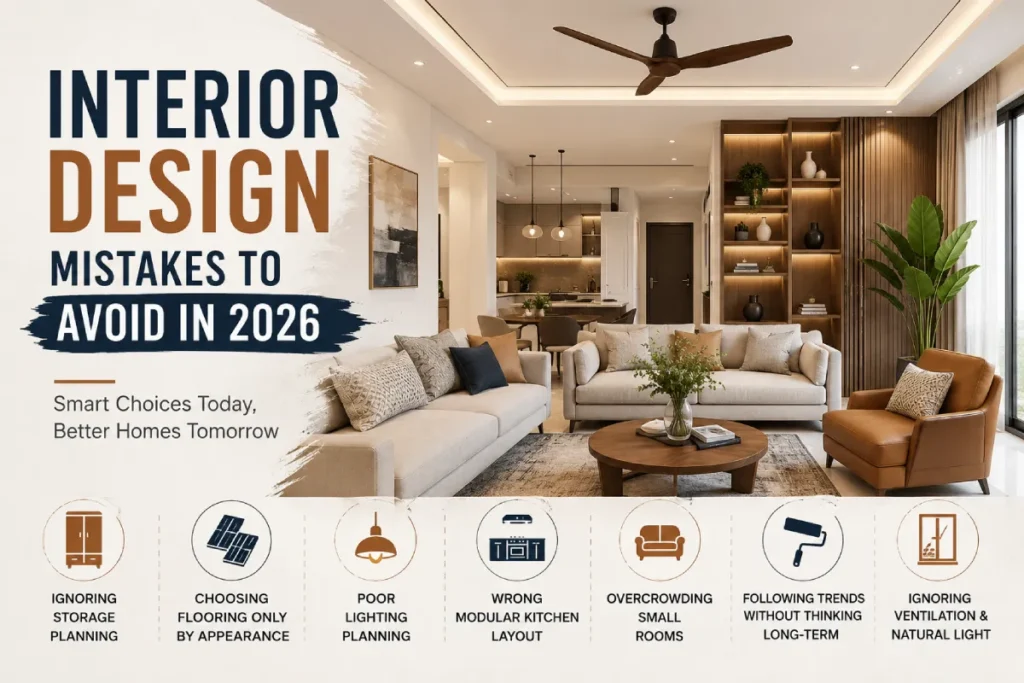
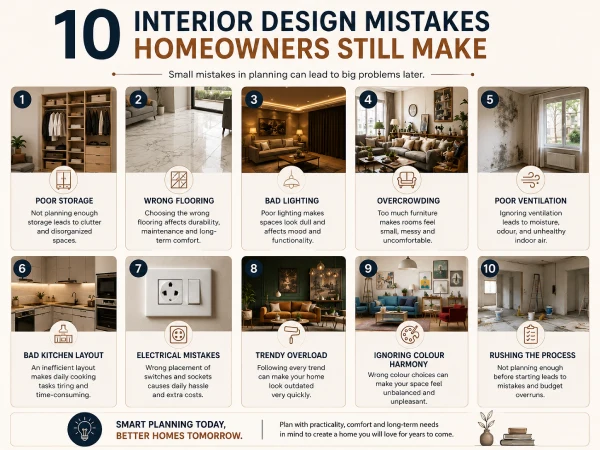
Ignoring Storage Planning Early
This is probably one of the biggest mistakes we still see in modern homes.
Many homeowners spend weeks selecting:
- wall colours
- flooring finishes
- decorative lighting
- curtains
- false ceiling patterns
But storage planning gets delayed until the final stages.
That usually creates long-term frustration.
In one apartment project we recently visited, the interiors looked visually clean and modern. However, after moving in, the homeowners realized there was hardly enough storage for:
- kids items
- charging accessories
- documents
- kitchen appliances
- luggage
- seasonal clothes
Within a few months, the house already started looking cluttered.
And honestly, this problem is becoming common in compact apartments where every inch matters.
Good interiors should not only look attractive during photoshoots. They should support daily routines comfortably without making the space feel crowded.
In 2026, smart storage matters more than oversized decorative elements.
That includes:
- loft cabinets
- hidden storage beds
- modular kitchen organizers
- vertical wardrobes
- utility storage
- shoe cabinets near entrances
One thing we regularly explain during consultations is this:
Open space feels luxurious only when clutter stays hidden properly.
Otherwise, even expensive interiors start feeling visually messy very quickly.
Choosing Flooring Only Based on Appearance
Flooring decisions affect daily comfort more than many homeowners realize.
Still, most people initially select flooring based mainly on showroom appearance.
One tile looks premium under bright lights.
One wooden flooring sample feels warm.
One terrazzo finish appears stylish in Instagram pictures.
Eventually, many homeowners choose materials without considering:
- maintenance
- moisture exposure
- foot traffic
- cleaning difficulty
- long-term durability
And honestly, flooring problems become frustrating because replacing flooring later is expensive and disruptive.
For example, glossy flooring may look elegant initially. However, in homes with children or elderly family members, highly polished surfaces can become difficult to maintain safely.
Similarly, certain wooden flooring finishes work beautifully in bedrooms but struggle in moisture-prone areas.
At Terazzo, we usually encourage homeowners to think practically before finalizing flooring materials.
A flooring choice should match:
- family lifestyle
- cleaning habits
- room usage
- climate conditions
- maintenance expectations
One thing we have noticed recently is that homeowners increasingly prefer seamless flooring finishes because they make interiors feel visually larger and cleaner.
That is one reason terrazzo, large-format tiles, and engineered wooden flooring continue gaining attention in premium interiors.
Poor Lighting Planning
Lighting mistakes completely change how interiors feel after completion.
And honestly, homeowners usually notice these issues only after moving in.
Many modern interiors focus heavily on decorative fixtures and false ceiling designs. However, poor lighting placement creates:
- dark corners
- harsh shadows
- eye strain
- uneven brightness
- uncomfortable room atmosphere
In several apartments, we still notice homeowners relying only on ceiling lights without layering:
- ambient lighting
- task lighting
- accent lighting
As a result, spaces often feel flat despite expensive interiors.
Warm lighting generally works better for:
- bedrooms
- living rooms
- lounge spaces
Meanwhile, kitchens and workspaces need brighter task lighting for practical usage.
Natural light matters equally.
One thing we regularly explain during site visits is this:
Even premium interiors start feeling uncomfortable if daylight and ventilation get ignored.
Many homeowners accidentally block natural light using:
- bulky furniture
- dark curtains
- oversized partitions
- heavy wall panelling
And then they compensate by adding excessive artificial lighting later.
Choosing the Wrong Modular Kitchen Layout
This problem affects daily routines more than people expect.
Many homeowners finalize modular kitchen designs based on appearance instead of workflow practicality.
And honestly, that creates frustration later.
Poor kitchen planning usually leads to:
- awkward movement
- blocked pathways
- limited counter space
- insufficient storage
- uncomfortable appliance placement
In compact apartments especially, layout planning becomes extremely important.
For example:
- L-shape kitchens usually work well for small and medium homes
- Parallel kitchens suit narrow spaces better
- Island kitchens need proper circulation space
- U-shape kitchens require larger layouts
Still, many homeowners choose layouts simply because they look attractive online.
At Terazzo, we usually explain one simple thing:
A modular kitchen should reduce effort during daily use, not increase movement unnecessarily.
Another common mistake is ignoring future appliance planning.
People often finalize cabinets before deciding:
- refrigerator size
- chimney placement
- microwave position
- dishwasher space
- water purifier location
Later, modifications become expensive and messy.
Overcrowding Small Rooms
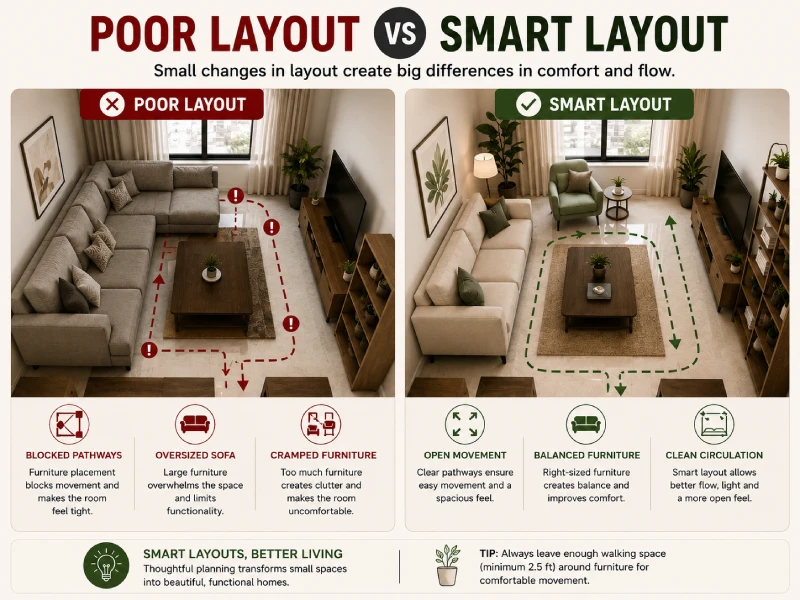
One of the fastest ways to ruin interiors is overcrowding. This usually happens when homeowners try fitting:
- oversized sofas
- large dining tables
- bulky wardrobes
- decorative partitions
- unnecessary furniture
inside compact spaces.
And honestly, modern interiors feel more premium when movement remains easy and open.
Many apartments already have limited usable space. Still, homeowners often select furniture based on showroom appearance instead of actual room dimensions.
As a result:
- walkways become tight
- rooms feel smaller
- cleaning becomes difficult
- visual balance disappears
At Terazzo, we regularly advise homeowners to leave breathing space inside rooms instead of filling every empty corner.
A well-planned compact room usually feels more luxurious than a crowded large room.
Following Trends Without Thinking Long-Term
Interior trends change faster now than ever before.
Last year, many homeowners wanted:
- dark textured walls
- oversized fluted panels
- heavy gold accents
- extremely bold colour palettes
Now, many of those same interiors already feel visually outdated.
And honestly, this is where practical interior planning matters.
Temporary trends should stay limited to elements that homeowners can replace easily later.
However, permanent materials like:
- flooring
- wardrobes
- modular kitchen finishes
- wall cladding
- storage units
usually work better when they remain timeless and balanced.
Neutral shades, warm textures, and practical layouts generally age much better than aggressively trendy interiors.
One thing we have noticed recently is that many homeowners now collect practical layout references from Houzz India Interior Ideas before starting interior work.
Ignoring Electrical Planning
This mistake creates frustration almost immediately after moving in.
And surprisingly, many homeowners still underestimate electrical planning during interior work.
Later, they realize:
- charging points are missing
- switches appear behind furniture
- kitchen appliances lack dedicated points
- TV unit wiring looks messy
- work-from-home setups feel inconvenient
Then extension boards start appearing across the house.
Good electrical planning should happen before:
- furniture finalization
- false ceiling work
- modular kitchen installation
- TV unit design
In 2026, modern homes require more charging points than before because people now use:
- laptops
- tablets
- smart TVs
- routers
- smart lighting
- kitchen appliances
- home office equipment
Poor planning creates long-term inconvenience. And honestly, fixing electrical problems later usually damages finished interiors.
Ignoring Ventilation and Airflow
Many homeowners focus heavily on visual appearance while ignoring airflow completely.
This creates:
- trapped heat
- poor air circulation
- humidity problems
- uncomfortable rooms
And honestly, this issue becomes worse in compact urban apartments.
Heavy partitions, blocked windows, oversized wardrobes near ventilation areas, and dark enclosed layouts reduce natural airflow significantly.
Good ventilation improves:
- comfort
- natural cooling
- indoor air quality
- lighting balance
At Terazzo, we usually encourage homeowners to avoid blocking windows unnecessarily, especially in smaller apartments.
Natural airflow often improves comfort more effectively than expensive décor additions.
Choosing Materials Without Considering Maintenance
Many materials look premium during installation.
However, daily maintenance tells a different story later.
Some homeowners choose:
- high-gloss surfaces
- textured wall finishes
- delicate laminates
- difficult flooring materials
without considering cleaning effort.
And honestly, busy families eventually prioritize convenience over appearance.
One thing we often explain during material discussions is this:
Beautiful interiors should remain manageable during normal daily life.
Otherwise, homeowners eventually regret those decisions.
For example:
- glossy surfaces show fingerprints quickly
- rough textures collect dust
- poor laminate quality peels faster
- low-grade hardware reduces lifespan
In 2026, homeowners increasingly prefer materials that balance:
- appearance
- durability
- easy maintenance
because long-term comfort matters more than temporary visual trends.
Hiring Multiple Contractors Without Coordination
This mistake causes unnecessary confusion in many projects.
Sometimes homeowners separately hire:
- carpenters
- electricians
- flooring workers
- painters
- false ceiling teams
- modular kitchen vendors
without proper coordination between them.
Eventually:
- timelines get delayed
- finishing quality suffers
- measurements mismatch
- repair work increases
And honestly, homeowners usually get stuck managing technical problems they never expected.
A coordinated interior workflow matters because every stage affects the next.
For example:
- electrical planning affects false ceiling work
- flooring levels affect modular kitchen fitting
- wardrobe dimensions affect lighting placement
Poor coordination often increases both cost and frustration.
That is one reason many homeowners now prefer working with complete interior solution providers instead of handling multiple vendors independently.
Ignoring Daily Lifestyle During Planning
This is one of the most overlooked interior mistakes.
Many homes look impressive visually but fail during actual day-to-day living.
For example:
- families with children need safer layouts
- elderly residents require easier movement
- work-from-home users need functional spaces
- pet owners need durable materials
Still, many homeowners design interiors mainly around appearance instead of lifestyle needs.
And honestly, practical comfort matters far more after moving in.
Good interior planning should always consider:
- family routines
- storage habits
- cleaning preferences
- movement comfort
- long-term usability
because homes should support people naturally instead of creating daily inconvenience.
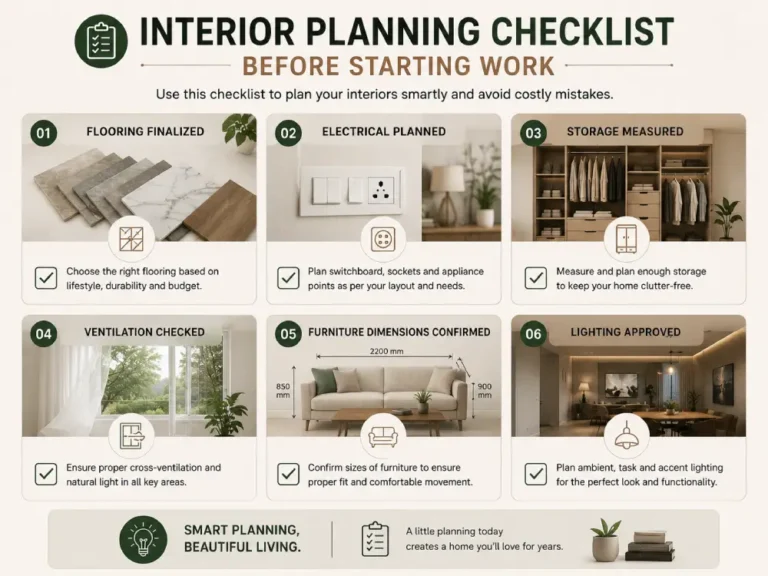
Conclusion
A well-designed interior should continue to feel warm even after the enjoyment of move-in day reduces.
And honestly, most interior mistakes happen because homeowners rush decisions without fully understanding how the space will function later during normal daily life.
At Terazzo, we regularly encourage homeowners to think beyond the following:
- social media trends
- showroom lighting
- temporary design hype
- decorative elements
because practical planning creates interiors that continue feeling comfortable for years.
Whether it is flooring, modular kitchens, wardrobes, lighting, storage planning, or complete residential interiors, thoughtful decisions early in the project usually save:
- future repair work
- unnecessary frustration
- clutter problems
- maintenance issues
- expensive modifications later
And in 2026, homeowners are slowly realizing something important.
Beautiful interiors matter. But comfortable interiors matter even more.
Frequently Asked Questions
What is the most common interior design mistake made by homeowners?
Poor planning is usually the biggest mistake. Many homeowners focus on appearance first and ignore storage, lighting, ventilation, and daily usability.
Why do some interiors feel uncomfortable after moving in?
Many homes look attractive visually but fail practically because of poor layout planning, lighting mistakes, overcrowding, and insufficient storage.
How important is lighting in interior design?
Lighting affects comfort, mood, room appearance, and functionality. Poor lighting can make even premium interiors feel dull or uncomfortable.
Why is storage planning important in modern homes?
In compact apartments, proper storage planning matters a lot because clutter builds up faster than most homeowners expect.
Should interiors follow trends completely?
Not really. Trends change fast. A wall colour that feels stylish today may start looking outdated after two or three years. That is why many homeowners now prefer simpler finishes for permanent interior elements.
Why do homeowners regret modular kitchen layouts later?
Usually because the kitchen looked good visually but did not work comfortably during daily use. Counter space feels smaller, storage gets filled quickly, and movement becomes frustrating during busy mornings.
How can small homes look bigger?
In many apartments, the problem is not actual room size. Poor furniture placement, dark colours, and blocked movement make spaces feel tighter. Better lighting and smarter storage usually improve the space immediately.
Why is storage planning important in modern interiors?
Most homeowners underestimate how quickly daily-use items pile up. Without proper storage, even expensive interiors start looking cluttered within months.
Is lighting really that important in interiors?
Absolutely. We have seen beautifully designed homes feel uncomfortable simply because the lighting was too harsh or uneven after sunset.